
The most interesting part of this Cusco painting workshop is not that you leave with something you made.
It is that the wine is already on the table while you are still deciding what you are going to paint.
That changes the rhythm immediately.
There is no bus full of travelers.
No archaeological checkpoint.
No fifteen-minute photo stop.
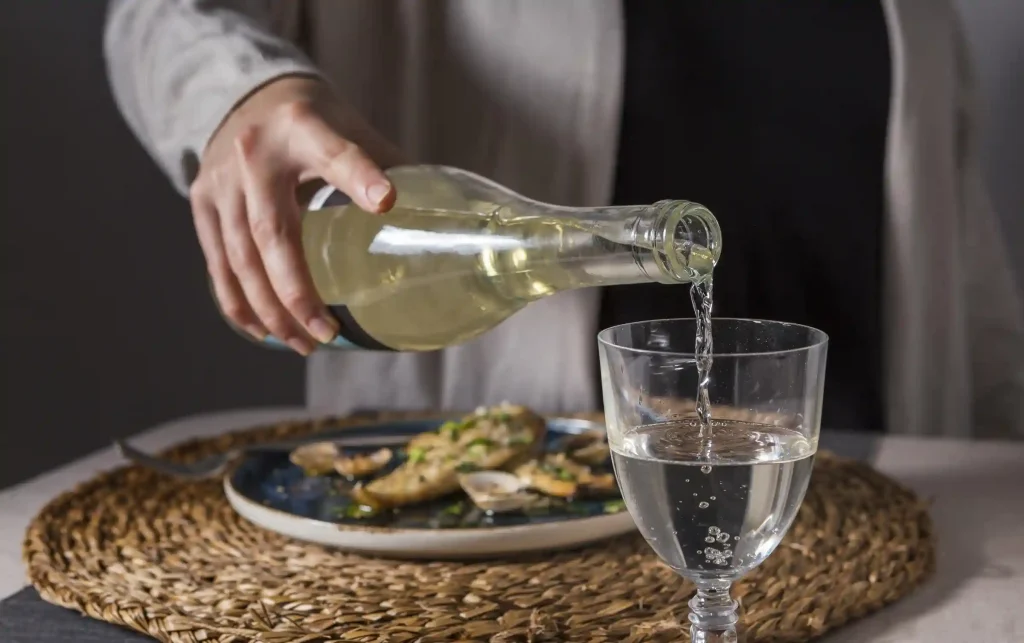
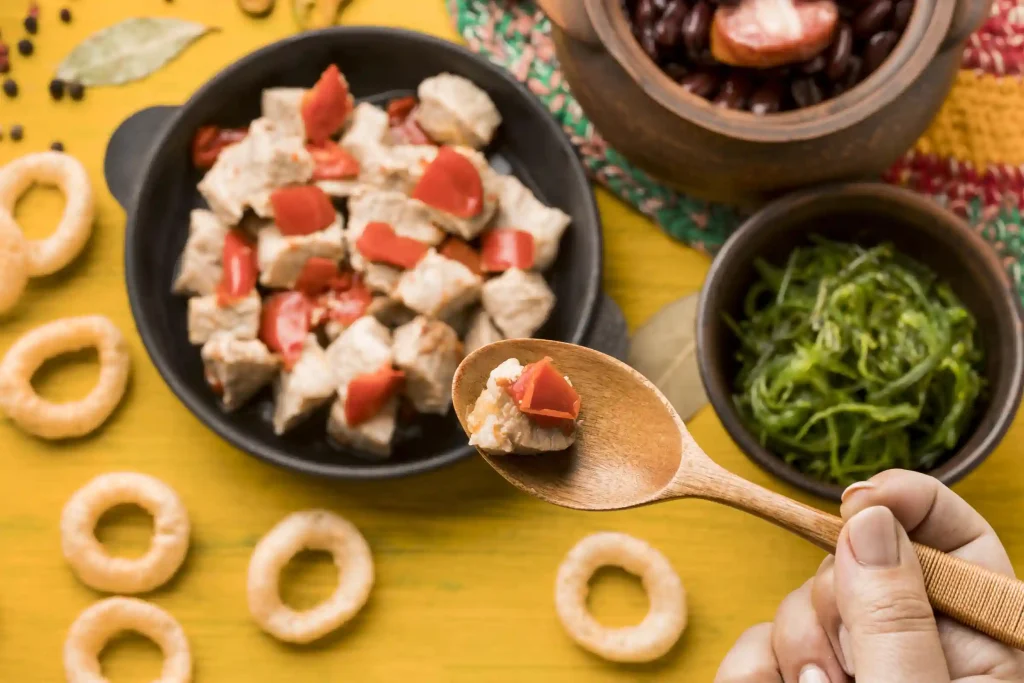
Instead, you sit in a private workshop with a local artist, choose between a Torito de Pucará or a canvas inspired by the Cusco School of Art, eat Andean cheese and local snacks, pour a glass of wine and spend the next few hours talking about art.
The current Private Painting Workshop With Wine & Andean Snacks experience in Cusco is designed around exactly that slower format.
As listed in 2026, the workshop generally lasts around two to three hours, is conducted privately for your group, includes materials, snacks and wine, and can be arranged in English or Spanish.
No painting experience is required.
That last detail is important.
This is not really a class for people who want to prove they can paint.
It is much more interesting for people who think they cannot.
What do you actually do during the workshop?
The experience is built around two artistic options.
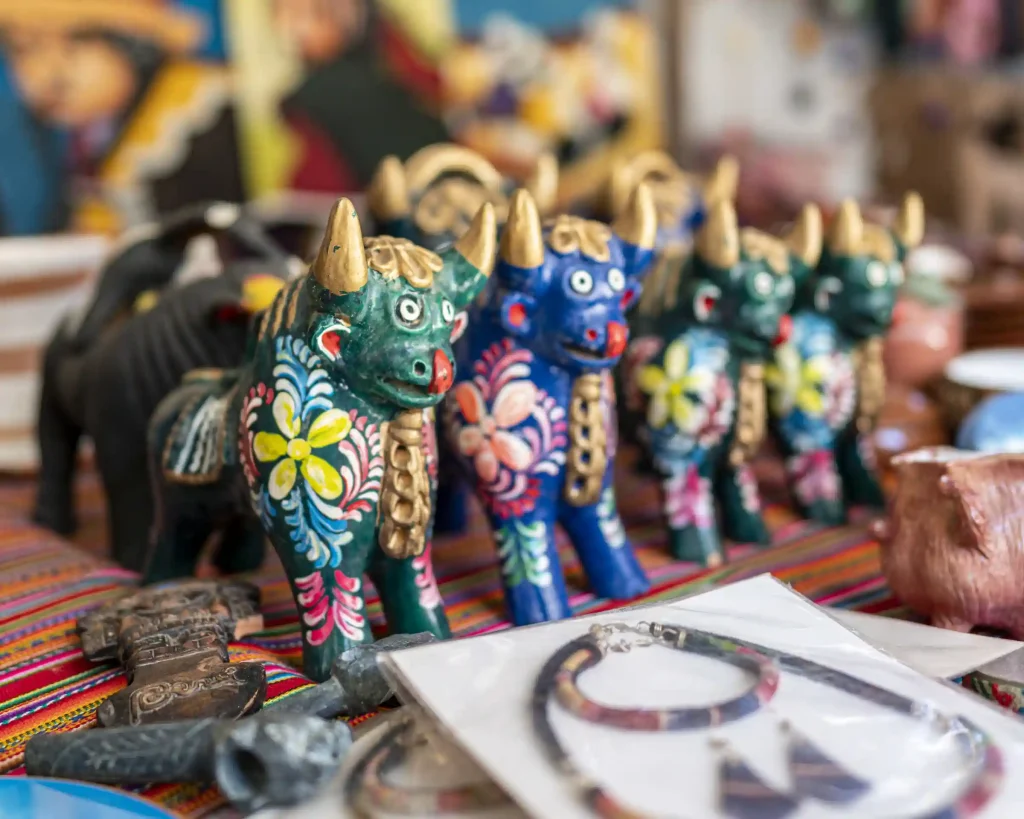
Option 1: Paint a Torito de Pucará
You receive an undecorated ceramic Torito and work with acrylic paint, brushes and reference designs.
The instructor introduces the cultural context and then helps you create your own version.
Option 2: Paint a Cusco School-inspired canvas
This option uses the visual language associated with colonial Cusco painting as a starting point.
You work on composition, color and simplified artistic techniques rather than attempting to reproduce a seventeenth-century masterpiece.
Both options include the same essential idea:
learn the context → create your own interpretation.
That sequence is what separates the experience from simply coloring an object.
How long does the Private Painting Workshop take?
Current 2026 listings generally place the activity at approximately:
2–3 hours
A Tripadvisor product listing gives the experience a duration of about three hours.
The operator’s own current information describes a flexible two-to-three-hour session.
That is a useful amount of time.
One hour would be enough to put color on the object.
Three hours allows:
- explanation
- questions
- planning
- painting
- mistakes
- corrections
- snacks
- conversation
- drying and wrapping
The extra time is not really about the paint.
It is about avoiding the feeling that someone is watching a clock behind you.
Who leads the workshop?
Current descriptions state that the experience is led by a local Cusco artist and anthropologist.
That combination is one of its stronger selling points.
An art instructor can explain technique.
An anthropological perspective can add context about:
- Andean visual traditions
- cultural symbolism
- colonial art
- the Torito de Pucará
- contemporary interpretation
- how cultural objects change through time
Of course, qualifications alone do not guarantee a fascinating conversation.
But this format gives the workshop the possibility of becoming substantially more than a painting class.
Use it.
Ask questions.
Why does the workshop offer two completely different subjects?
Because they tell two different stories about Peru.
Torito de Pucará
This is an Andean ceramic tradition associated primarily with Puno, not Cusco.
The bull reflects a later Andean cultural world shaped after cattle arrived with the Spanish.
It became connected with ideas surrounding:
- protection
- fertility
- prosperity
- livestock
- household well-being
Painting one in Cusco is therefore a regional cultural exchange rather than a purely Cusqueñan tradition.
Cusco School-inspired canvas
The Cusco School of Painting developed in the colonial Andes.
European religious art arrived with Spanish rule.
Indigenous and mestizo artists adopted those techniques and gradually transformed them through:
- local symbolism
- Andean landscapes
- regional materials
- distinctive decorative language
- different approaches to color and religious imagery
So the two choices represent two kinds of cultural adaptation.
That makes the decision more interesting than:
ceramic or canvas?
It is really:
Which story do you want to explore?
Which option should you choose?
| If you want… | Choose |
|---|---|
| An easy object to decorate | Torito |
| A compact souvenir | Torito |
| More cultural symbolism around domestic tradition | Torito |
| More painting freedom | Canvas |
| Greater interest in colonial art | Canvas |
| Less pressure about drawing | Torito |
| A flatter object to pack | Canvas |
| A couples activity | Either |
| A family activity | Torito is often easier |
| More technical painting discussion | Canvas |
There is no objectively better option.
If you are already planning to attend another Torito workshop in Cusco, choose the canvas.
If the Torito is new to you, it may be the more immediately accessible experience.
Is the Torito de Pucará actually from Cusco?
No.
A responsible workshop should explain this.
The Torito’s traditional ceramic history belongs to the Puno region, particularly the broader Pupuja pottery tradition.
Pucará became the famous commercial name associated with the object, partly through the transport corridor connecting southern Peru.
Cusco later became one of the major places where travelers encountered and purchased Toritos.
That makes painting one here perfectly reasonable.
What would be inaccurate is presenting it as an ancient Inca bull.
Cattle did not exist in the pre-Hispanic Andes.
They arrived after the Spanish conquest.
The Torito developed later through Andean cultural adaptation.
That story is considerably more interesting than an invented Inca origin.
What is the Cusco School of Art?
This is another subject that deserves more than a thirty-second introduction.
The Cusco School, or Escuela Cusqueña, refers to an important artistic tradition that developed in the colonial Andes.
European religious compositions were reproduced and taught in Cusco, but local artists did not simply copy them forever.
Over time, paintings acquired distinctive features associated with local workshops and Andean interpretation.
Visitors today may notice:
- intense decorative detail
- gold-colored ornamentation
- religious scenes
- local flora or fauna
- Andean landscape references
- visual elements not typical of European originals
The goal of a short traveler workshop is not to reproduce these techniques historically.
That would take far longer.
The useful goal is to understand why Cusco developed such a recognizable visual tradition.
Does the workshop really teach traditional Cusco School painting?
Not in the full historical sense.
And that distinction is important.
A true specialist may work with:
- oil
- canvas
- traditional preparation methods
- gilding
- detailed iconography
- complex religious composition
A three-hour visitor experience must simplify.
You are learning through inspiration and interpretation.
That is still worthwhile.
In fact, a workshop becomes more trustworthy when the instructor is willing to say clearly:
“This is a simplified contemporary exercise inspired by the tradition.”
rather than pretending you will master colonial painting in one afternoon.
What is included?
Current descriptions of the workshop include:
- private workshop space
- artistic instruction
- cultural explanation
- painting materials
- brushes
- acrylic paints when painting the Torito
- canvas materials for the art option
- apron
- wine
- Andean cheese
- local snacks
- your finished artwork
- wrapping for transport
Optional hotel pickup may also be available depending on the booking arrangement.
The standard central meeting point is around the fountain in Cusco’s Plaza de Armas.
What are the Andean snacks?
Current descriptions refer to:
- Andean cheese
- local snacks
- small appetizers
The exact assortment can vary.
That is important because travelers sometimes interpret the word “Andean” as a guarantee of a specific tasting menu.
It is not.
If food matters to you, ask what will be served on your date.
This is especially important for:
- vegans
- lactose intolerance
- gluten-free travelers
- allergies
- children with specific dietary needs
The workshop is primarily an artistic experience.
Do not book it assuming the snacks replace a complete lunch unless the operator specifically confirms that.
What kind of wine is served?
Current public descriptions confirm that wine is included but do not consistently identify a specific bottle, winery, grape or vintage.
That means you should not choose this experience because you expect a formal wine tasting.
The wine plays a different role.
It helps create the atmosphere:
paint slowly → snack → talk → continue painting
If wine quality or Peruvian wine is especially important to you, ask before booking:
- Is the wine Peruvian?
- Which winery?
- Red or white?
- Is a non-alcoholic alternative available?
Those questions are more useful than assuming.
Is the wine unlimited?
Do not assume that.
The experience description says wine is served during the workshop, but exact quantities depend on the setup and group.
This is an art experience with wine.
It is not a drinking package.
That is probably better.
At Cusco’s altitude, a relaxed glass alongside food and water makes much more sense than turning the painting table into a bar.
Is this a good activity on your first day in Cusco?
Yes, for one simple reason:
you are seated.
Many travelers arrive in Cusco at around 3,400 meters and immediately make their first afternoon unnecessarily difficult.
They walk uphill to San Blas.
Then to a viewpoint.
Then to Saqsaywaman.
Then back down.
A painting workshop asks very little physically.
You can sit, eat, drink water and work at your own pace.
That makes it one of the better cultural activities for a quieter arrival day.
The only caveat is alcohol.
If you have just arrived and do not feel well, there is no reason you need to drink wine simply because it is included.
Ask for a non-alcoholic option or skip the alcohol.
The painting is still the experience.
Is this better in the morning or afternoon?
For most travelers:
afternoon.
The operator currently advertises flexible sessions between roughly 10:00 a.m. and 5:00 p.m., subject to availability.
A session around 3:00 or 4:00 p.m. works especially well because you can:
- sightsee in the morning
- have lunch
- rest briefly
- paint
- continue to dinner
Morning works better if:
- you are traveling with children
- you have evening plans
- you prefer painting in strong natural light
- you do not want alcohol late in the day
What does “private” actually improve?
More than you might expect.
A painting workshop involves dozens of tiny interruptions.
Someone asks how to mix a color.
Someone needs help with a line.
Someone wants to discuss a symbol.
Someone finishes quickly.
Someone else is still painting the first side.
In a large group, the instructor becomes a traffic controller.
In a private format:
- you control the pace
- questions can become longer conversations
- the guide can adapt instruction
- children can work differently from adults
- experienced painters can ask more technical questions
- beginners can receive more basic help
Privacy matters less in a conventional sightseeing tour.
Here, it can materially change the experience.
Is the workshop good for couples?
Very.
It has something conventional wine tastings do not:
you are occupied.
You can talk without having to maintain conversation continuously.
You can compare designs.
You can help each other.
Or you can refuse to help each other and become strangely competitive over ceramic bulls.
Both versions work.
If you choose the Torito option, painting one each also connects naturally with the common Andean practice of displaying Toritos in pairs.
Do not make them identical.
Two different designs are usually more interesting.
Is it good for families?
Potentially, yes.
The current Tripadvisor listing accepts a broad age range and presents the activity as suitable for families.
However, the wine component obviously applies only to adults.
For children, the important questions are:
- Is a non-alcoholic drink provided?
- Can the instructor adapt the explanation?
- Is the child comfortable concentrating for 2–3 hours?
- Is the workspace appropriate for young children?
A five-year-old and a fifteen-year-old experience three hours very differently.
For younger children, the Torito is probably easier than the canvas because the object itself provides structure.
Do you need painting experience?
No.
That may be one of the strongest reasons to do it.
Experienced painters usually understand how to:
- control a brush
- leave negative space
- mix colors
- work around wet sections
Beginners learn those lessons in real time.
The first mistake usually helps.
A line becomes too thick.
You cover it.
Now the correction becomes another decorative form.
Once perfection is lost, the workshop becomes more enjoyable.
This is not an art examination.
What should you paint first on a Torito?
A useful sequence is:
1. Main body color
Cover the largest areas first.
2. Large motifs
Rosettes, bands or major patterns.
3. Secondary color
Build contrast.
4. Horns and tail
Use a smaller brush.
5. Eyes and small details
Leave these until your hand is comfortable.
6. Accent color
Use sparingly.
7. Stop
This is the most difficult step.
There is always another dot you could add.
What should you wear?
Wear clothes you will not mourn if they receive a small paint mark.
Good options:
- ordinary T-shirt
- casual trousers
- comfortable shoes
- light sweater
- easy-to-remove jacket
Avoid:
- white clothing
- delicate alpaca knitwear
- loose sleeves
- expensive scarves
An apron helps.
It does not create an invisible force field around you.
How do you transport the finished Torito?
If you choose the ceramic option, the vulnerable parts are:
horns → ears → tail
The operator currently includes careful wrapping, but you should still think about how the piece will travel afterward.
For a flight:
- let the paint dry thoroughly
- protect each horn
- cushion the ears
- protect the tail
- place the piece in a rigid box when possible
- fill empty space
- keep it in carry-on luggage if practical
Do not simply wrap the whole object once and throw it between sweaters.
Pressure on one horn can break it while the body remains completely protected.
What about the canvas?
The canvas is generally easier to transport because it is flat.
Ask:
- exact dimensions
- whether it is stretched
- whether it can be rolled
- whether the paint will be fully dry
If you are flying the next morning, this may matter more than your artistic preference.
A still-wet painting and an airport are not ideal companions.
Is the workshop wheelchair accessible?
The current Tripadvisor listing says the experience is not wheelchair accessible.
That is an important limitation.
Historic Cusco contains many buildings with:
- steps
- narrow entrances
- uneven floors
- colonial layouts
Travelers with mobility requirements should confirm the exact workshop location and access conditions before paying.
A seated activity is not automatically an accessible activity.
What is the cancellation policy?
The current Tripadvisor listing offers a full refund for cancellation at least 24 hours before the experience begins, subject to the terms attached to the booking.
Booking channels can have different conditions.
If flexibility matters, read the cancellation terms of the specific platform through which you reserve rather than relying on a general description of the workshop.
How much does it cost?
Current 2026 listings are not perfectly consistent.
Depending on the booking channel and group arrangement, public prices appear roughly around the US$40–50 per person starting range.
That inconsistency is worth noticing.
A private experience may change price according to:
- group size
- pickup
- booking channel
- date
- included setup
Confirm the actual final rate before paying.
Do not rely on one headline price copied from a different booking site.
Is it worth the price?
Ask what you are comparing it with.
If you compare the cost with buying:
- one ceramic Torito
- one glass of wine
- cheese
then no.
Buying those items separately is cheaper.
But that is not what you are paying for.
The actual product includes:
- private instructor time
- cultural interpretation
- materials
- studio preparation
- a 2–3 hour activity
- food and wine
- personalized help
- a finished object
The value is in the process.
If you only want a souvenir, buy a professionally made piece from an artisan.
Painting workshop vs normal wine tasting
| Painting + wine workshop | Wine tasting | |
| Main focus | Art and cultural conversation | Wine |
| Physical activity | Very low | Very low |
| Take something home | Yes | Usually no |
| Alcohol knowledge | Limited unless specifically discussed | Higher |
| Creative involvement | Very high | Low |
| Best for couples | Excellent | Excellent |
| Best for non-drinkers | Still works | Less suitable |
| Cultural-art context | High | Usually low |
If wine is your main interest, book a wine-focused experience.
If you want a creative afternoon where wine is part of the atmosphere, choose this workshop.
Painting workshop vs Torito-only workshop
The private wine workshop is better if you value:
- privacy
- conversation
- slower pace
- adult atmosphere
- choice between canvas and ceramic
A simpler Torito workshop may be better if you want:
- lower cost
- shorter duration
- children-focused activity
- no alcohol component
Neither is universally better.
They solve different itinerary problems.
Why is this a good rainy-day activity?
Cusco’s wetter period generally runs from roughly November through March.
The city can be clear in the morning and wet by mid-afternoon.
That makes indoor cultural experiences extremely useful.
Instead of losing an afternoon to:
rain,
wet stone streets,
and repeated weather-app checking,
you can paint for several hours while the weather becomes irrelevant.
For rainy-season itineraries, this is the kind of activity worth keeping flexible.
What should you ask before booking?
Ask these questions:
Who will teach the workshop?
Confirm whether the local artist/anthropologist described in the experience will actually lead your session.
Which option can I choose?
Torito or canvas.
Which wine is served?
Useful if wine matters to you.
What snacks are included?
Important for allergies.
Is there a non-alcoholic option?
Especially for children or non-drinkers.
Where is the exact workshop space?
Useful for accessibility and walking distance.
How will the finished work be packed?
Important if you are flying soon.
What is the exact duration?
Listings currently vary between two and three hours.
Who will enjoy this experience most?
Couples
Probably the strongest fit.
Small groups of friends
Private format allows conversation without strangers sharing the table.
Solo travelers
Potentially excellent if the operator accepts solo bookings at a reasonable rate.
Art lovers
Worthwhile as a cultural introduction rather than advanced training.
Travelers on an acclimatization day
Low physical demand.
Repeat visitors to Cusco
Especially good if you have already seen the principal archaeological attractions.
Who should skip it?
Consider another activity if:
- you dislike painting
- you want a serious professional art course
- wine is your only interest
- you expect a full meal
- you want to make pottery from raw clay
- you need a wheelchair-accessible venue that cannot be confirmed
- you have only three hours in Cusco and have not seen the city
The workshop works best as a complement to Cusco.
Not a replacement for it.
Our review
Cultural interest: 4.7/5
The combination of Andean art, Cusco School context and a local instructor creates strong potential for real conversation.
Creativity: 5/5
You spend most of the session making something.
Privacy: 5/5
One of the format’s biggest advantages.
Wine experience: 3.5/5
Wine adds atmosphere, but this is not marketed as a technical wine tasting.
Food experience: 3.5/5
The snacks support the workshop rather than becoming the main event.
First-day suitability: 4.5/5
Seated and low effort, though travelers can simply skip alcohol if they do not feel like drinking.
Value: 4.4/5
Best for travelers who care about the conversation and activity rather than calculating the retail value of the included items.
Is the Private Painting Workshop With Wine & Andean Snacks worth doing?
Yes, if you understand what makes it different.
The souvenir is not the main reason.
The wine is not the main reason.
Even the painting is only part of it.
The strongest version of the experience is the conversation that happens because everyone finally sits down.
You ask why the Torito comes from Puno.
You ask why Cusco’s colonial paintings look different from European ones.
You choose a color.
You drink some wine.
You realize that your supposedly simple decorative line is harder to paint than expected.
Then the instructor makes it look easy.
That small moment is useful.
Travelers spend enormous amounts of time in Cusco looking at objects made by other people.
This workshop asks you to spend several hours trying to make one yourself.
Your Torito may be asymmetrical.
Your canvas may not be something a museum wants.
That does not matter.
The point is that the next time you see a hand-painted object in a Cusco market, you may notice how difficult the details actually are.
And that is a surprisingly valuable thing to take home.
Editor’s note: Duration, pricing, wine selection, snacks, instructor availability and pickup arrangements can change. This guide reflects current 2026 public listings; confirm the exact conditions attached to your reservation date before booking.