

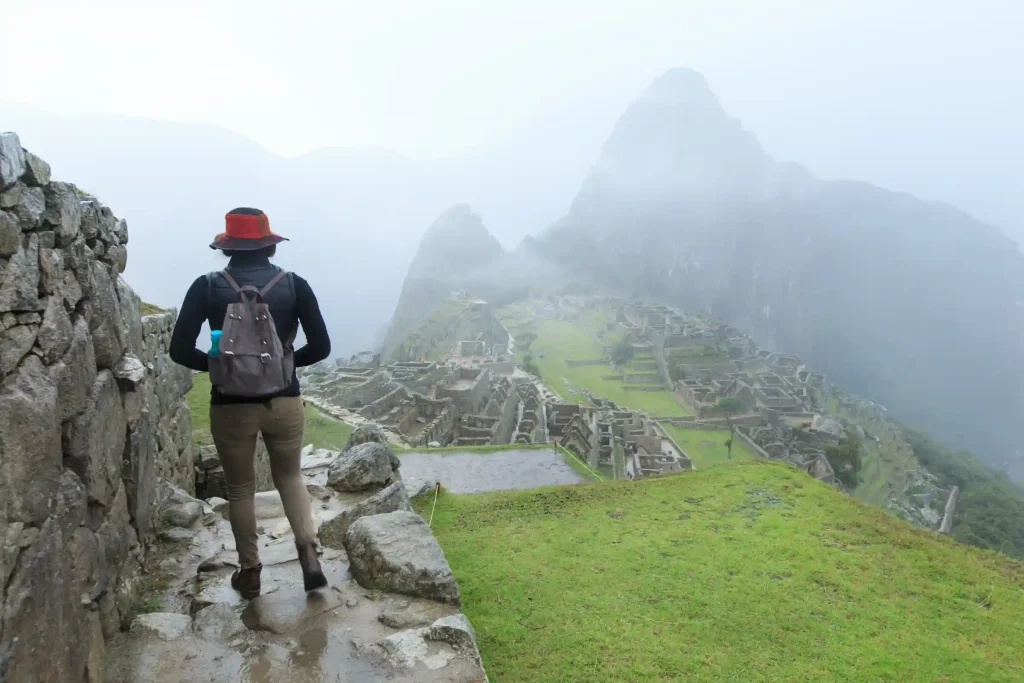
Amazing trip, thoughtful logistics, and a guide who made Machu Picchu unforgettable.
Thi W TripadvisorClassic Free Walking Tour in Cusco
Slogan Here


OVERVIEW
Trip Overview
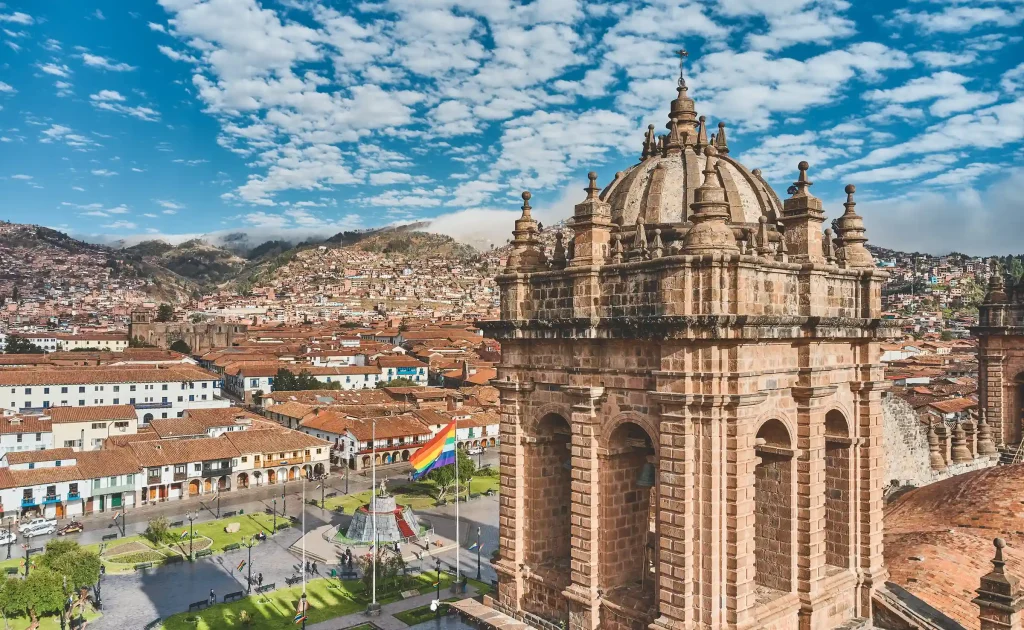
You feel it the moment you step outside. The air is thinner up here – 3,399 meters above sea level – and the light has a sharpness to it that you don’t get anywhere else. The streets are narrow, cobblestoned, and built over the bones of an empire that once stretched 4,000 kilometers from north to south.
Most people arrive in Cusco and want to rush straight to the next destination. That’s understandable. But the travelers who take two hours first to walk the historic center with someone who actually lives here – those are the ones who later say they finally understood what they were seeing at every other stop.
Itineraries & Prices
Accomodation
Accommodation
Up to 12 people
Group size
15,090 feet (4,600 meters)
Max. altitude
Easy
Difficulty
by Bus
Transport
1B, 1L, 1D
Meals
Trip Summary
The Free Walking Tour Cusco Classic by Pullman Machu Picchu is those two hours.
A local guide. The Cathedral. The 12-Angle Stone. The exterior of Qoricancha, the Temple of the Sun. Streets that haven’t changed in 500 years. All of it in a single morning walk through the heart of the oldest continuously inhabited city in the Americas.
There’s no upfront price. You show up, you walk, you listen – and at the end you pay what you think it was worth.
Available every day. All ages. The right way to start any trip to Cusco.
Trip Details
- Tour name: Free Walking Tour Cusco Classic
- Duration: Approximately 2 hours
- Start time: 10:45 a.m. (morning slot) | Additional slots: 1:30 p.m. / 3:30 p.m. / 6:00 p.m.
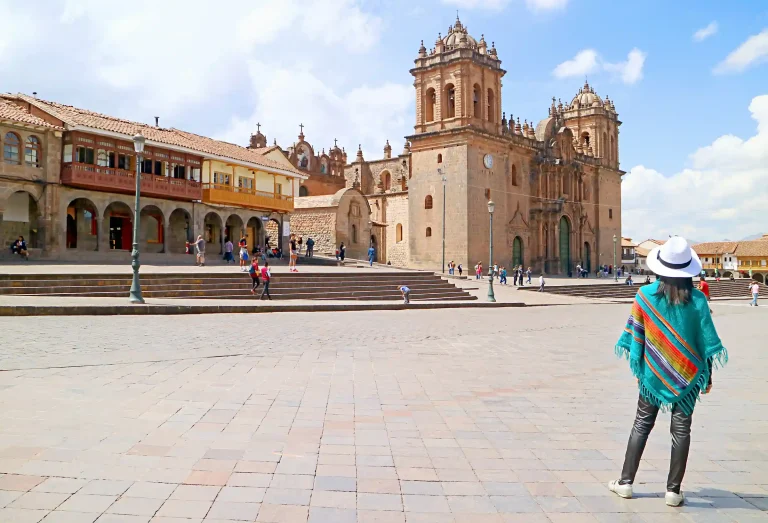
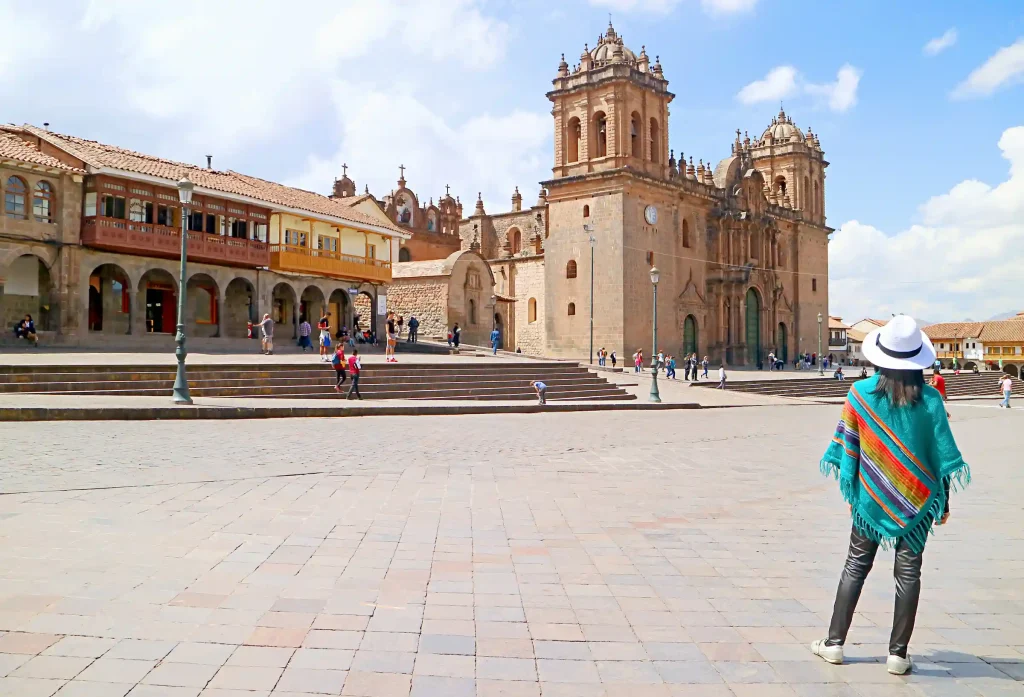
- Meeting point: Cathedral Basilica – Plaza de Armas, Cusco (east side of the plaza, in front of the main Cathedral entrance)
- Languages: Spanish / English
- Type of service: Shared group
- Difficulty: Easy
- Approximate altitude: 3,399 – 3,420 m above sea level
- Total walking distance: Approximately 2.5 km
- Terrain: Cobblestone streets throughout; gentle inclines with one short uphill section near Hatunrumiyoc
- Recommended age: All ages
- Availability: Every day of the year, including holidays
- Price model: Tip-based – no upfront cost required
- Note: Evening slot (6:00 p.m.) requires advance booking at least 1 day prior
Day by Day Schedule
Meeting Point: Cathedral Basilica, Plaza de Armas Today’s highlight: Standing at the ceremonial heart of the largest empire in pre-Columbian American history
The tour starts at 10:45 a.m. in front of the Cathedral Basilica, on the east side of the Plaza de Armas. Arrive 10 minutes early – the guide begins on time and the group moves together from the first moment.
If you’ve just arrived in Cusco, the altitude will make itself known immediately. The air is thinner here than at the top of most European mountains, and the first few minutes of walking may feel more effortful than you expect. The pace throughout the tour is relaxed and stops are frequent.
Your guide opens with a brief orientation: what you’re about to walk through, how to read Inca and Spanish architecture side by side, and a few practical notes for the route ahead.
- Terrain: Flagstone plaza, flat
- Duration: 10 minutes
Plaza de Armas
The colonial appearance is convincing, but it’s a surface layer. Beneath the Cathedral – built between 1559 and 1654 – are the foundations of Kiswarcancha, the palace of the Inca Viracocha. The Spanish dismantled the palace and used its stones for the construction above. The fountain at the center of the plaza marks roughly the spot where the Inca held their most important public ceremonies.
Your guide will walk you around the plaza perimeter, pointing out the surviving original wall sections at ground level, the difference in stone-cutting technique between Inca and Spanish construction, and the two churches that anchor the eastern edge.
- Altitude: 3,399 m
- Duration: 10 minutes
- Terrain: Flagstone, flat
- The Cathedral contains over 400 paintings from the Cusco School, including a famous Last Supper with guinea pig on the table
- The plaza covers approximately 13,600 square meters
Avenida El Sol
Walking south along Avenida El Sol, you’re following a road the Inca called Intiq Churin – Son of the Sun – which ran directly toward Qoricancha as a ceremonial axis. The alignment was intentional: on specific dates, the sun rose and set in precise alignment with this street and the temple at its far end.
Look at the curb as you walk. The drainage channels cut into the stone are original Inca infrastructure, part of a sophisticated underground water management system that still functions beneath the modern city. Some of the side streets branching off to the right are original Inca thoroughfares, so narrow that two people can barely pass each other.
The air here is open compared to the plaza – you can see the mountains that ring the city, the ridgelines that the Inca used as astronomical markers, and the way the modern city has grown up around a grid that was already perfectly planned 600 years ago.
- Duration: 10 minutes
- Terrain: Paved, gentle downhill
- Altitude: 3,395 – 3,399 m
- Walking time from Cathedral: approximately 5 – 7 minutes
Palacio de Túpac Yupanqui
This is the stop where your guide will ask you to look down. The base of these walls – the lower two meters – is Inca. Polygonal stones, fitted without mortar, with joints so precise you can’t get a blade between them. Above that line, the construction changes noticeably in texture, color, and precision: that’s the Spanish addition.
Túpac Yupanqui was the tenth Sapa Inca, one of the most effective military strategists the empire produced. His palace was built at a time when Cusco was the capital of a civilization that had no parallel in the Americas.
The streets here are narrower and shadier than the main avenue. The temperature drops by several degrees in the alleyways – if you haven’t already, this is a good moment to pull out a light layer. The cobblestones are uneven underfoot; watch your step.
- Duration: 10 minutes
- Terrain: Narrow cobblestone street, slight uphill
Cusicancha
An open archaeological complex in the middle of the city, largely off the radar for travelers who aren’t looking for it. Cusicancha in Quechua means the place of happiness. It’s believed to be the birthplace of the Inca Pachacútec – the ruler who transformed Cusco from a modest regional settlement into the capital of Tawantinsuyu, the empire that extended from present-day Colombia to central Chile.
The walls here are clean, excavated, and largely original. Groups are small. The contrast with the tourist density on the main streets is striking.
- Duration: 10 minutes
- Altitude: 3,401 m
- Terrain: Open courtyard, flat
- Partially restored by Peru’s Ministry of Culture
- No entrance fee for exterior areas
Qoricancha – Exterior
One of the tour’s defining stops
This is the one that stops people mid-sentence.
The Spanish built the Church and Convent of Santo Domingo directly on top of – and out of – Qoricancha, the Temple of the Sun. The curved Inca foundation wall visible on the exterior is so precisely constructed that a standard piece of paper cannot be inserted between the fitted joints. When the 1950 earthquake devastated much of Cusco, the Inca sections of this building barely moved. The colonial sections cracked and collapsed.
Your guide will explain what the original temple looked like: sheathed in hundreds of golden panels, housing the mummified bodies of previous Inca rulers, aligned to the solstice sunrise. It was the spiritual and political center of the entire Andean world. The Spanish stripped it in a matter of weeks.
- Duration: 15 minutes
- Altitude: 3,397 m
- Terrain: Cobblestone, slight uphill approach
- Qoricancha dates to the mid-15th century reign of Pachacútec
- Interior visits require a separate ticket (Boleto Parcial or Boleto General de Cusco)
- The 1950 earthquake caused significant damage to the colonial church; Inca walls remained structurally intact
Rimacpampa and Pumakurku
These are the quieter streets of the tour – narrower, less photographed, and more layered in terms of what you can see in a single wall section. Rimacpampa means the speaking place in Quechua: this was a ceremonial area used for public proclamations during Inca times.
The streets here give you a sense of what Cusco felt like before it became a major tourist destination. Local residents go about their day alongside tour groups. Laundry on the line, small workshops, the occasional delivery motorbike navigating cobblestones that were never designed for it.
Your guide will point out specific stone-cutting details, the slight inward lean of the walls designed for seismic stability, and carved symbols left by Inca builders that most visitors walk past without noticing.
- Duration: 10 minutes
- Terrain: Narrow cobblestone streets, slight uphill
The 12-Angle Stone – Hatunrumiyoc Street The tour’s most photographed stop – and for good reason
This stone is in a wall. Part of a living, standing wall that has been here for over 500 years. It has twelve angles. Each one fits precisely against the adjacent stones, without mortar, without metal tools, without visible error of any kind.
Everyone photographs it. That’s fine – it earns it. But your guide will also explain the engineering logic behind the technique, and why a civilization without iron, without the wheel, and without written language managed to build structures that have consistently outlasted everything the Spanish built on top of them.
The street is narrow and shaded. In the morning, it’s relatively quiet. By early afternoon, there are crowds. This is one of the clearest advantages of the morning start time.
- Duration: 10 minutes
- Altitude: 3,407 m – the highest point of the tour route
- Terrain: Narrow cobblestone alley, flat
- The stone forms part of the exterior wall of the former palace of the Inca Roca
- Carved and fitted using only stone tools, water, and abrasion
- Hatunrumiyoc Street is considered one of the finest surviving examples of original Inca urban architecture in Cusco
Casa del Inca Garcilaso de la Vega
Gómez Suárez de Figueroa – known as the Inca Garcilaso de la Vega – was born in this building in 1539, eight years after the Spanish conquest. His mother was a niece of the Sapa Inca Huayna Cápac. His father was a Spanish captain.
He grew up in two languages, two cultures, two versions of history. When he moved to Spain as an adult, he spent the rest of his life writing down the Inca world in terms that European readers could understand. His Comentarios Reales de los Incas, published in 1609, remains one of the most referenced documents in Andean historiography.
The building now houses the Regional Historical Museum. Your guide will cover the main points of his life and explain why his mixed heritage made him both indispensable and controversial as a historical source.
- Duration: 10 minutes
- Altitude: 3,402 m
- Terrain: Cobblestone, downhill from Hatunrumiyoc
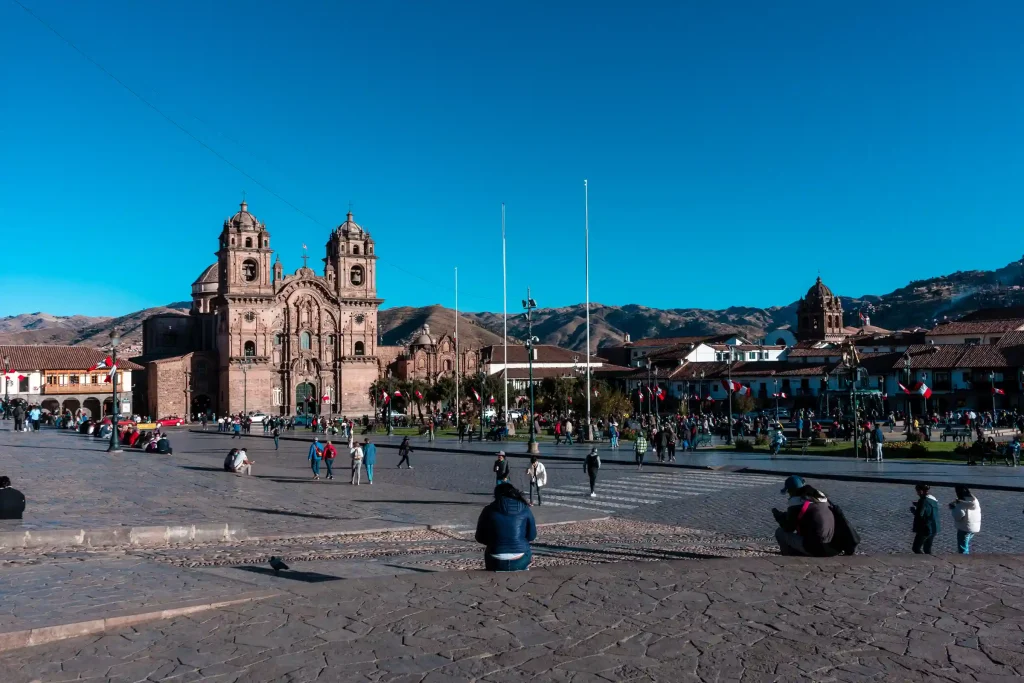
Plaza San Francisco – End of Tour
The tour ends at Plaza San Francisco, in front of the Basilica of San Francisco – a structure that took more than three centuries to complete and holds one of the largest collections of colonial paintings in South America within its catacombs.
The plaza itself is more local in feel than the Plaza de Armas: market stalls on adjacent streets, street food vendors, residents cutting through on their way to work. It’s a good place to keep the morning going.
Your guide will give practical recommendations for the rest of the day: restaurants, markets, the San Blas artisan quarter, nearby archaeological sites, and what to do before your next Cusco excursion.
The tip is voluntary. The suggested range is USD 5 to 20 per person, in cash. Your guide will not ask for it – but will accept with genuine appreciation.
- Duration: 10 minutes
- Altitude: 3,397 m
- Terrain: Flagstone plaza, flat
- Total walking distance: approximately 2.5 km
- Total elevation change: approximately 20 meters net
- Total duration: approximately 2 hours
Inclusions
What’s Included
What’s included in the Free Walking Tour Cusco Classic:
- Professional bilingual guide (Spanish / English) certified by Peru’s Ministry of Tourism
- Complete 2-hour guided route through Cusco’s historic center
- Historical and contextual information at each stop
- Altitude acclimatization briefing at the start of the tour
- Guide assistance throughout the entire route
- End-of-tour recommendations for restaurants, markets, nearby activities, and next steps in Cusco
- Emergency contact protocol
What’s Not Included
What is not included:
- Entrance fees to archaeological sites (Qoricancha and Cusicancha require the Boleto General or Boleto Parcial de Cusco; purchased separately at the sites)
- Food or beverages
- Transport of any kind (the tour is entirely on foot)
- Personal expenses
- Travel insurance
- Guide tip (voluntary – suggested USD 5 to 20 per person)
More Tour Information
- The 12-Angle Stone on Hatunrumiyoc Street – One of the most photographed stones in the world, and once your guide explains the engineering behind it – no mortar, no cutting errors, fitted by hand into a living wall that has survived centuries of earthquakes – you’ll look at every Inca wall in Peru differently from that point forward.
- Qoricancha, Temple of the Sun – You won’t go inside on this tour, but standing at the exterior of the most important temple in the Inca world – watching curved, perfectly fitted Inca stonework disappear beneath a Spanish colonial church built on top of it – tells you everything about what happened here in the 1530s without needing another word.
- The Plaza de Armas of Cusco – Not just a colonial square. The Inca called it Huacaypata – the Place of Weeping – and it was the ceremonial heart of an empire. Your guide will show you how to read both layers at once: the Spanish surface and the Inca foundation beneath it.
- Avenida El Sol and the original Inca urban grid – The street follows an axis laid out centuries ago, aligned toward Qoricancha. Look at the channels cut into the curb as you walk: those are original Inca drainage systems, still functioning today.
- Palacio de Túpac Yupanqui – The walls of a royal palace still standing on a street most visitors walk past without looking down. The lower two meters are original Inca stonework – you can touch them if you want. Nothing above that section is older than the 16th century.
- Cusicancha Archaeological Complex – An open-air urban site that most travelers skip in favor of the bigger names. Which means, for once, you’ll have it mostly to yourself. Believed to be the birthplace of Pachacútec, the ruler who turned a small regional kingdom into a continental empire.
- Casa del Inca Garcilaso de la Vega – The building where a man was born in 1539 who would spend his life writing down the Inca world before it disappeared entirely. Son of an Inca princess and a Spanish captain. The first mestizo chronicler. His Comentarios Reales remains one of the most important documents of Andean history.
- Plaza San Francisco – end of tour, start of the day – A plaza with a local feel that the Plaza de Armas doesn’t have: market stalls, street food, the massive Franciscan convent that has stood since 1534. Your guide will give you practical recommendations for the rest of the morning.
- A guide who walks these streets every day – Not a performance, not a memorized script. Your guide grew up in Cusco. The difference shows within the first five minutes.
- The context that makes everything else make sense – This walk changes how you read the Sacred Valley, Machu Picchu, and every site on the rest of your itinerary. Two hours invested here pays off for the rest of the trip.
Hotel pickup:
The Free Walking Tour Cusco Classic is a self-arrival tour. There is no hotel pickup included in the standard service. The meeting point is in front of the Cathedral Basilica on the east side of the Plaza de Armas – a 5 to 15-minute walk from most accommodation in the historic center.
For private tours, hotel pickup can be arranged at an additional cost. Contact our reservations team at the time of booking.
Luggage storage:
Do not bring large luggage to the tour. If you’ve just arrived in Cusco and need to store bags before your accommodation is ready, the following options are available:
- Most hotels and hostels will hold luggage for guests, even before official check-in
- Several luggage storage services operate near the Plaza de Armas (rates typically USD 2 to 4 per bag per day)
- Andeara’s office can hold small bags for clients with confirmed bookings on request – ask when you reserve
Payment conditions:
- Free Tour (Shared): No payment at booking. Tip at the end of the tour in cash. Suggested amount: USD 5 to 20 per person.
- Private Tour: A deposit of 30% is required at booking to confirm the reservation. The remaining balance is due on the day of the tour before departure. Cancellations made 48 hours or more before the start receive a full refund of the deposit. Cancellations within 48 hours of departure are non-refundable.
Payment is accepted in USD, Peruvian soles, or by card through our secure online platform. Bank transfers and cash are also accepted at our office.
Why these conditions exist: Private guides are scheduled in advance and hold your time slot exclusively. The deposit protects the guide’s reserved time. Last-minute cancellations without this structure would leave guides without compensation for hours they could not offer to other travelers.
Availability
The Free Walking Tour Cusco Classic runs every day of the year, including public holidays and peak season.
Available time slots:
- 10:45 a.m. – morning slot (primary)
- 1:30 p.m. – early afternoon
- 3:30 p.m. – late afternoon
- 6:00 p.m. – evening slot (advance booking required at least 1 day prior)
No advance booking is required for the three daytime slots on the shared tour. Arrive at the meeting point a few minutes before the start time, let the guide know you’re joining, and that’s it.
For the 6:00 p.m. evening slot, please book at least 24 hours in advance through Andeara’s reservations team.
For private tours, contact us directly. Most requests can be accommodated with 24 to 48 hours of notice; same-day bookings are subject to guide availability and cannot always be confirmed.
For all other Pullman Machu Picchu tours – including Sacred Valley day trips, Machu Picchu, and the Inca Trail – booking windows and availability conditions vary. Contact our reservations team for details specific to each product.
Clothing:
- Thermal base layer – mornings and evenings in Cusco are cold year-round, at any time of year
- Mid-layer fleece or light down jacket
- Windproof and waterproof outer shell – Cusco’s rainy season runs November through March; light afternoon showers are possible at other times of year
- Comfortable walking shoes with non-slip soles – cobblestones require grip
- Light hat or cap for sun protection during the tour
- Sunglasses with UV protection – altitude makes this a real consideration, not an accessory
- Warm socks
Personal items and health:
- High-SPF sunscreen (SPF 50 or higher recommended for altitude use)
- Personal medications, particularly any treatment for altitude sickness (acetazolamide/Diamox if your doctor has prescribed it)
- Antihistamines and basic pain relief
- Small personal first aid kit
- Any prescription medications in original packaging
- Travel insurance card or policy number
Documents:
- Passport in original form – some archaeological sites require it, and a photo on your phone is not a substitute
- Emergency contact information in physical form as well as on your phone
- Travel insurance policy number
Special requirements:
If you have mobility limitations, use assistive devices (crutches, wheelchair, walker), carry professional photography or video equipment, or travel with service animals, contact Andeara’s reservations team before booking. The cobblestone surfaces of Cusco’s historic center present specific challenges for mobility equipment. The reservations team will advise on what adjustments are possible and, for private tours, can adapt the route where practical.
Lorem ipsum dolor sit amet, consectetur adipiscing elit. Nam imperdiet tellus nisi, a sollicitudin turpis commodo quis. Aliquam sit amet dapibus dolor. Vestibulum maximus velit quis nulla tempor malesuada. Donec tempus purus id tellus tincidunt, vel porta nunc semper. Nunc in consectetur quam, ac tempor tellus.Donec eget blandit nibh. Proin ultricies ligula odio, quis scelerisque diam pellentesque sed. Ut vel sem in erat rhoncus facilisis. Ut et egestas lorem. Aliquam id bibendum ex. Duis nec velit sapien. Suspendisse malesuada ultricies odio, sit amet efficitur nibh mattis nec. In vitae dictum tellus, ut vestibulum quam. In a nisl arcu. Aliquam egestas metus massa, ac consectetur elit placerat in
Additional Information
Transport:
This tour is entirely on foot. No transport is included, provided, or required. The complete route covers approximately 2.5 km of walking through Cusco’s historic center, beginning and ending at accessible plazas.
For inter-city transport to and from Cusco, Andeara can assist with coordination of bus, train, or private transfer connections. Contact the reservations team for current options.
For day trips from Cusco to the Sacred Valley, Machu Picchu, or other regional destinations, Pullman Machu Picchu offers a full range of transport-inclusive tour packages. Your guide can give you an overview of the options at the end of the walking tour, or you can contact our reservations team directly.
Travel Restrictions
Strikes and demonstrations:
Strikes and demonstrations are common in Peru and may affect some tours, including city walking tours. Plaza occupations, road blockages, or closed access to specific sites can alter the planned route. Under these circumstances, your guide will adjust the route to include alternative stops of equivalent interest. In cases of significant disruption to public safety, the tour may be rescheduled or cancelled. If changes or cancellations occur, Andeara’s operations team will contact you directly. Your safety determines every decision we make.
Lost items:
Pay attention to where you leave your things at each stop and take everything with you when the group moves on. You are solely responsible for your belongings throughout the tour.
Health considerations at altitude:
Cusco sits at 3,399 meters above sea level. The altitude affects people differently, and there is no reliable way to predict in advance how your body will respond.
Common symptoms include headache, shortness of breath, mild nausea, and fatigue. These typically improve within 24 to 48 hours of arrival, provided you rest, hydrate, and avoid alcohol.
Before joining the tour, consider:
- Spending at least one full day resting in Cusco after arrival before any walking activity
- Avoiding alcohol and heavy meals during the first 24 hours
- Staying consistently hydrated throughout your first days at altitude
- Carrying any altitude medication your doctor has recommended
If you experience severe symptoms – persistent vomiting, confusion, loss of coordination, or difficulty breathing – do not join the tour. Seek medical attention immediately.
This tour is rated Easy and involves 2.5 km of walking on flat to gently inclined cobblestone terrain. It is suitable for most people in normal health. For travelers with cardiovascular or respiratory conditions, consultation with your physician before traveling to Cusco is strongly recommended – not as a formality, but because the altitude is genuinely significant at this elevation.
Lorem ipsum dolor sit amet, consectetur adipiscing elit. Nam imperdiet tellus nisi, a sollicitudin turpis commodo quis. Aliquam sit amet dapibus dolor. Vestibulum maxi
mus velit quis nulla tempor malesuada. Donec tempus purus id tellus tincidunt, vel porta nunc semper. Nunc in consectetur quam, ac tempor tellus.
Donec eget blandit nibh. Proin ultricies li
gula odio, quis scelerisque diam pellentesque sed. Ut vel sem in erat rhoncus facilisis. Ut et eg
estas lorem. Aliquam id bibendum ex. Duis ne
c velit sapien. Suspendisse malesuada ultricies odio, sit amet efficitur nibh mattis nec. In vitae dictum tellus, ut vestibulum quam. In a nisl arcu. Aliquam egestas metus massa, ac consectetur elit placerat in
Lorem ipsum dolor sit amet, consectetur adipiscing elit. Nam imperdiet tellus nisi, a sollicitudin turpis commodo quis. Aliquam sit amet dapibus dolor. Vestibulum maximus velit quis nulla tempor malesuada. Donec tempus purus id tellus tincidunt, vel porta nunc semper. Nunc in consectetur quam, ac tempor tellus.Donec eget blandit nibh. Proin ultricies ligula odio, quis scelerisque diam pellentesque sed. Ut vel sem in erat rhoncus facilisis. Ut et egestas lorem. Aliquam id bibendum ex. Duis nec velit sapien. Suspendisse malesuada ultricies odio, sit amet efficitur nibh mattis nec. In vitae dictum tellus, ut vestibulum quam. In a nisl arcu. Aliquam egestas metus massa, ac consectetur elit placerat in
Lorem ipsum dolor sit amet, consectetur adipiscing elit. Nam imperdiet tellus nisi, a sollicitudin turpis commodo quis. Aliquam sit amet dapibus dolor. Vestibulum maximus velit quis nulla tempor malesuada. Donec tempus purus id tellus tincidunt, vel porta nunc semper. Nunc in consectetur quam, ac tempor tellus.Donec eget blandit nibh. Proin ultricies ligula odio, quis scelerisque diam pellentesque sed. Ut vel sem in erat rhoncus facilisis. Ut et egestas lorem. Aliquam id bibendum ex. Duis nec velit sapien. Suspendisse malesuada ultricies odio, sit amet efficitur nibh mattis nec. In vitae dictum tellus, ut vestibulum quam. In a nisl arcu. Aliquam egestas metus massa, ac consectetur elit placerat in
Prices & Availability
Lorem ipsum dolor sit amet, consectetur adipiscing elit. Nam imperdiet tellus nisi, a sollicitudin turpis commodo quis. Aliquam sit amet dapibus dolor. Vestibulum maximus velit quis nulla tempor malesuada. Donec tempus purus id tellus tincidunt, vel porta nunc semper. Nunc in consectetur quam, ac tempor tellus.Donec eget blandit nibh. Proin ultricies ligula odio, quis scelerisque diam pellentesque sed. Ut vel sem in erat rhoncus facilisis. Ut et egestas lorem. Aliquam id bibendum ex. Duis nec velit sapien. Suspendisse malesuada ultricies odio, sit amet efficitur nibh mattis nec. In vitae dictum tellus, ut vestibulum quam. In a nisl arcu. Aliquam egestas metus massa, ac consectetur elit placerat in
Require More Information
Select a departure date
Pick a month, then choose your start date. Return date is calculated using the tour duration.
Upcoming departures
Contact Us
Let our local experts help you choose the perfect Peruvian adventure.
Related Tours

Traveler Reviews