
The most interesting part of painting a Torito de Pucará in Cusco happens before you choose a color.
You discover that the Torito de Pucará is not originally from Cusco.
Its ceramic tradition comes from Puno, particularly the area connected with Santiago de Pupuja and later Pucará. Peru’s official tourism inventory traces the craft to potters from Santiago de Pupuja who eventually commercialized their work along the Puno–Cusco railway corridor and in Pucará itself.
That makes the experience slightly more interesting than its name initially suggests.
You are in Cusco.
You are painting an object from another part of the southern Andes.
And instead of simply buying it from a souvenir shelf, you spend several hours trying to understand why it looks the way it does.
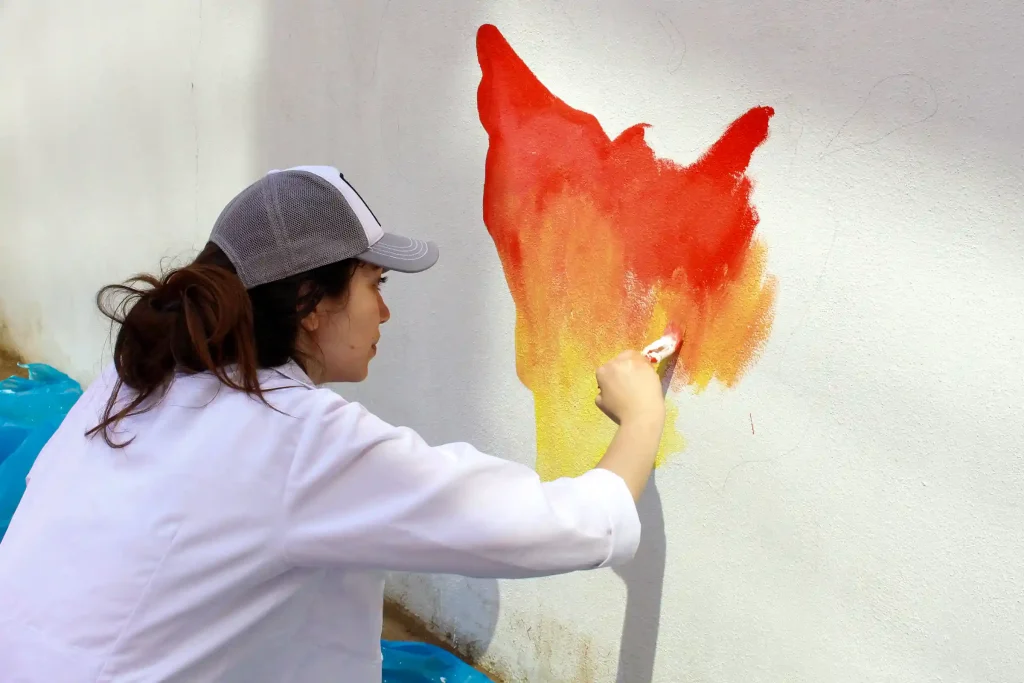
The current Cusco Paint Your Own Torito de Pucará Art and Culture experience takes that idea and turns it into a small-group painting session led by an instructor.
According to its current 2026 listing, the activity lasts approximately three hours, accepts a maximum of six participants, includes the painting materials and acrylic paint, and is offered in English and Spanish.
But is spending three hours painting a ceramic bull actually worthwhile?
For the right traveler, surprisingly, yes.
What do you actually do during the Torito painting experience?
The concept is uncomplicated.
You receive a Torito de Pucará piece to work on, painting materials and guidance during the creative process.
The current listing specifically includes:
- painting materials
- a Torito de Pucará piece
- acrylic paint
- guidance during the activity
The experience lasts around three hours, considerably longer than the quick craft demonstrations sometimes included in conventional sightseeing tours.
That extra time matters.
Painting a torito is not technically difficult in the same way as creating the ceramic figure from raw clay.
You are not learning the entire pottery process.
Instead, most of your attention goes toward:
color → pattern → small details → composition → finishing
That sounds easy.
Then you try painting around a horn without touching the section you finished five minutes earlier.
The object suddenly seems much more complicated.
Why paint a Torito instead of simply buying one?
Because buying and making produce two very different memories.
A Torito purchased from a market might take five minutes to choose.
Painting one can take several hours.
During that time, you begin noticing features that are easy to ignore in a shop:
- the raised tail
- exaggerated eyes
- horns
- decorative rosettes
- lines around the body
- the handle-like form
- the opening traditionally incorporated into the vessel
Peru’s official tourism inventory documents several distinctive elements of traditional Torito decoration, including rosettes and other modeled ornaments, while also describing a production process involving clay preparation, molding, manual finishing, drying and firing at temperatures that can reach approximately 800°C to 1,000°C.
You are not performing all those steps during the Cusco workshop.
And that difference should be understood.
You are painting a Torito, not learning to manufacture a traditional Torito from beginning to end.
That distinction actually makes the experience easier to evaluate.
Is this a traditional pottery workshop?
Not exactly.
This is primarily a painting experience.
That matters because a traditional ceramic artisan may participate in:
- selecting and preparing clay
- forming the basic structure
- manually attaching horns and decorative details
- drying the ceramic
- firing it
- applying finishes
- completing additional firing or glazing processes
The visitor experience concentrates on the decorative stage.
| Experience | What you actually learn |
|---|---|
| Torito painting workshop | Color, decoration, symbolism and creative interpretation |
| Traditional pottery workshop | Forming, clay preparation and ceramic production |
| Artisan demonstration | Observation of professional techniques |
| Buying a finished Torito | Final craftsmanship and design |
| Visiting Pucará/Pupuja | Geographic and cultural origin of the tradition |
None is inherently better.
They simply answer different questions.
If your question is “How are traditional ceramics manufactured?”, seek a pottery workshop.
If your question is “Can I understand this symbol while making something personal?”, the painting experience makes considerably more sense.
What makes this particular Cusco experience different?
Size.
The current Tripadvisor listing limits the experience to six travelers maximum.
That may be one of the strongest aspects of the format.
Painting does not work particularly well in a group of twenty people.
Someone needs help mixing a color.
Someone wants to understand a symbol.
Someone accidentally paints over something.
Someone else finishes quickly and wants to add another detail.
A six-person maximum allows considerably more interaction than a large-group craft demonstration.
It also makes this type of activity particularly suitable for:
- couples
- families
- small groups of friends
- solo travelers
- travelers interested in art
- visitors wanting a quieter afternoon in Cusco
This is not an attraction where more people necessarily create more atmosphere.
Here, fewer can be better.
Where does the experience begin?
The current listing gives the meeting point as Plaza de Armas de Cusco, Del Medio 123.
It also states that the guide contacts participants approximately 5 to 10 minutes before pickup, and the activity ends back at the original meeting point.
That central starting point is useful if you are staying around:
- Plaza de Armas
- San Blas
- San Pedro
- Avenida El Sol
- the historic center
You do not need to dedicate another half-day to transportation.
And that leads to one of the experience’s less obvious advantages.
This may be better on your first day than another archaeological tour
Cusco sits at approximately 3,400 meters above sea level.
Many travelers arrive enthusiastic and immediately try to do too much.
Walk uphill through San Blas.
Visit Sacsayhuamán.
Walk back.
Explore the market.
Climb another hill.
By late afternoon, enthusiasm has been replaced by a headache and an intense interest in sitting down.
A painting activity changes the rhythm.
Most of the experience is sedentary.
There is no long hike.
There is no mountain pass.
There is no 4:00 a.m. departure.
That makes it a practical cultural activity for an arrival afternoon or recovery day.
Experience → useful fact → recommendation:
If you have just arrived from Lima or another low-altitude destination, an indoor three-hour creative session can fit your first afternoon better than a physically demanding excursion.
Save Rainbow Mountain for later.
The Torito will not require oxygen from your legs.
But there is one cultural detail the instructor should explain
The Torito is not an Inca object.
Cattle were introduced to the Andes after the Spanish arrival.
The ceramic bull developed later through the interaction of introduced livestock with existing Andean concepts surrounding fertility, animals, agriculture, protection and ritual.
That cultural mixture is essential to understanding the object.
Calling it an “ancient Inca bull” makes the story simpler.
It also makes it wrong.
The traditional Torito is better understood as a product of Andean cultural adaptation and continuity.
That makes the painting session more interesting because you are not simply reproducing archaeology.
You are interacting with a tradition that continued evolving long after the Inca period.
Why does the Torito look so unusual?
Try drawing a realistic bull.
Now look at a Torito de Pucará.
They are not attempting the same thing.
Traditional versions frequently contain exaggerated features:
- protruding eyes
- prominent tongue
- curved tail
- ornate body
- decorative flowers
- pronounced horns
The shape is symbolic and ceremonial rather than anatomically realistic.
Official descriptions of the craft identify decorative elements such as the rosetón, associated in contemporary interpretations with wealth, together with ornaments such as the gualco and enjalmita.
That gives you an interesting choice during the workshop.
Do you reproduce traditional-looking decoration?
Or create something completely personal?
Should you copy traditional colors?
No.
Unless that is what you want.
Traditional examples often contain more restrained:
- brown
- cream
- ochre
- black
- reddish
- earthy tones
Contemporary Toritos can be completely different.
Turquoise.
Pink.
Blue.
Gold.
Orange.
Black and white.
Floral.
Minimalist.
Almost psychedelic.
This is where some travelers become unnecessarily nervous.
They ask:
“What is the correct color?”
There is no single correct answer for a recreational painting experience.
Contemporary artisans themselves reinterpret the object.
If your workshop is presented as a creative cultural activity rather than an exercise in exact historical reproduction, personalization is part of the point.
But should every symbol have a meaning?
This is where caution helps.
Tourism sometimes turns Andean iconography into an overly convenient codebook.
Red means one thing.
Blue means another.
Three lines mean three worlds.
Every triangle becomes a mountain.
Every spiral represents Pachamama.
Real cultural traditions are rarely that tidy.
Some symbols have documented interpretations.
Others vary between communities.
Some are contemporary.
Some may simply be decorative choices.
If your instructor distinguishes between traditional interpretation and modern artistic interpretation, that is a good sign.
If every brushstroke is presented as a secret Inca symbol, ask more questions.
What do previous travelers say about the experience?
The current Tripadvisor rating looks excellent:
5.0 out of 5.
But there is an important caveat.
At the time of checking in 2026, the activity has only two published reviews. Both were from family travelers who participated in September 2025.
That is encouraging.
It is not yet a large sample.
Both reviewers particularly highlighted similar aspects:
- knowledgeable instruction
- friendly assistance
- cultural information
- organization
- satisfaction with their finished Toritos
One reviewer emphasized the instructor’s knowledge of the history and culture behind the art, while another described the class as informative and well organized.
That consistency is positive.
But with only two reviews, it would be premature to treat the 5.0 score as strong statistical evidence.
Our interpretation of the reviews
| Category | What current reviews suggest | Confidence |
| Instructor friendliness | Very positive | Good, but small sample |
| Cultural explanation | Positive | Good, but small sample |
| Organization | Positive | Limited evidence |
| Family experience | Particularly positive | Both reviews were family visits |
| Artistic result | Positive | Limited evidence |
| Overall satisfaction | 5/5 so far | Only 2 reviews |
That is a more useful way to read a perfect score.
Who operates the experience?
The activity is currently listed as being offered by AMARU EXPLORER PERU.
Tripadvisor’s current operator page shows a broader rating of approximately 4.9/5 across more than 100 reviews, although those reviews cover the company’s different excursions and activities rather than this Torito workshop alone.
That distinction matters.
An operator rating tells you something about general service.
It does not tell you exactly how one specific instructor will conduct one particular art session.
For this experience, the two workshop-specific reviews remain the more directly relevant evidence.
How much does the Torito painting experience cost?
When checked in 2026, Tripadvisor’s international listing showed the experience from approximately US$58 per adult, with the price varying according to group size and booking conditions.
Local-currency listings can display different converted amounts.
That means the useful comparison is not simply:
“Is $58 expensive for painting?”
Consider what you are paying for:
- approximately three hours
- small-group format
- instructor
- cultural interpretation
- materials
- the object you paint
- a central Cusco activity
Then compare that with your priorities.
If you simply want a Torito to place on a shelf, buying one directly from an artisan is cheaper and will probably give you a technically superior object.
If you value the process, the economics change.
You are paying for an activity rather than merely ceramics.
Paint your own Torito vs buy one: which is better?
| Paint your own | Buy from an artisan | |
| Finished quality | Depends on you | Usually higher |
| Personal connection | Very high | Moderate |
| Cultural learning | Potentially high | Depends on seller |
| Time required | About 3 hours | 10–30 minutes |
| Creative involvement | Very high | None |
| Uniqueness | Completely unique | Depends on artisan |
| Best for children | Excellent | Limited interaction |
| Best for collectors | Less suitable | Better |
| Memory value | Very high | Depends on purchase |
The best solution may actually be:
paint one and buy one.
Not necessarily on the same day.
After trying to decorate your own Torito, you may notice professional craftsmanship differently.
Lines that once looked simple suddenly look impossibly precise.
Is it suitable for children?
The current listing states an age range of 5 to 60 years and a maximum group size of six.
Families are particularly interesting here because both of the workshop’s currently published reviews came from family visits.
Painting also gives children something many conventional cultural tours struggle to provide:
a task.
Instead of listening for an hour, they are doing something with their hands.
For younger participants, however, parents should consider whether they are comfortable concentrating on one activity for several hours.
Three hours can feel very different to a five-year-old and a fifteen-year-old.
Do you need to know how to paint?
No.
That may actually make it more entertaining.
People with no painting experience often spend the first few minutes trying to avoid mistakes.
Then the first mistake happens.
A line becomes too thick.
A drop lands somewhere unexpected.
Two colors mix.
The supposed disaster becomes a flower.
After that, people relax.
This is not a professional art examination.
You do not need:
- drawing experience
- ceramic experience
- knowledge of Andean art
- professional brushes
- your own materials
The current listing states that materials and acrylic paint are included.
Your main contribution is patience.
What should you wear?
There is one item I would specifically avoid:
your nicest white shirt.
Acrylic paint dries quickly.
That is useful for a three-hour tourist workshop.
It is less convenient when the decorative blue stripe intended for the Torito ends up on your sleeve.
Wear:
- a washable T-shirt
- casual trousers
- comfortable shoes
- a light sweater or fleece
- a compact rain jacket during the wet season
You do not need hiking equipment.
This may be the rare Cusco activity where Salomon hiking boots contribute almost nothing to the experience.
Comfort is enough.
Morning or afternoon: which session makes more sense?
A separate Tripadvisor attraction listing for the activity currently shows sessions around 9:00–10:45 a.m. and 4:00–5:45 p.m., although the bookable three-hour product asks travelers to check availability for specific starting times. Because these listings do not present identical duration information, confirm the exact session attached to your booking rather than assuming those schedules are interchangeable.
That discrepancy is worth noticing.
It is exactly the kind of small operational detail travelers often discover after booking.
For most itineraries:
Morning works better if you:
- have dinner plans
- travel with young children
- want strong natural light
- prefer doing creative activities while fresh
Afternoon works better if you:
- arrive in Cusco that morning
- have visited a museum earlier
- want something relaxed after sightseeing
- need an indoor activity during the rainy season
My preference for a typical Cusco itinerary would be the afternoon.
Archaeological sites deserve your morning energy.
Painting works surprisingly well when you are ready to slow down.
Is it a good rainy-day activity?
Very much so.
Cusco’s wettest period generally falls between approximately November and March.
Tourists often respond to an afternoon downpour by doing exactly the same thing:
stand under an arcade around Plaza de Armas and wait.
A painting workshop gives that afternoon a purpose.
There is something particularly satisfying about hearing rain outside while concentrating on a tiny ceramic horn that refuses to cooperate.
The weather becomes background rather than a problem.
For rainy-season travelers, this kind of indoor activity can therefore be more useful than it first appears.
What is unusual about doing this in 2026?
Painting the Torito is not merely a tourism invention.
In March 2026, Pucará itself organized a major “Pinta Tu Torito” competition as part of the National Day of the Torito de Pucará celebrations.
The competition included children’s, district and national categories on March 15, 16 and 17, immediately before the National Day celebration on March 18.
That is an interesting contemporary connection.
Painting and creatively reinterpreting the Torito is happening not only in visitor workshops in Cusco.
The practice is also being used publicly in Pucará itself as part of current cultural programming.
This does not make a tourist workshop equivalent to traditional artisan production.
But it does show that creative reinterpretation is not completely disconnected from the living tradition.
What does March 18 have to do with your Torito?
More than most visitors realize.
March 18 is officially the National Day of the Torito de Pucará in Peru, established by Law 31492.
In 2026, Pucará expanded the celebrations with competitions, artisan activities and an Indigenous dance event at the Kalasaya archaeological complex.
If you happen to travel through southern Peru around mid-March, you therefore have another option.
Paint a Torito in Cusco.
Then see how the tradition is celebrated closer to its geographic home in Puno.
The same object looks different once you change the landscape around it.
What should you ask the instructor?
Do not spend three hours painting silently.
Use the opportunity.
Ask:
Where was my ceramic Torito made?
This is one of the most important questions.
Which motifs are traditional?
Separate inherited design from contemporary decoration.
Why are Toritos often displayed in pairs?
Protection, prosperity, fertility and household well-being are among the meanings commonly connected with the figure.
Why does it have an opening?
Historical Toritos were connected with ceremonial uses rather than functioning solely as sculpture.
Which colors are traditional?
Then decide whether you want to ignore them completely.
Is the instructor also an artisan?
An excellent question whenever a tourism activity describes itself as culturally connected.
Three hours provides enough time for better questions than:
“Does this blue look okay?”
Although you will probably ask that too.
What is not included in the cultural story unless you ask?
Provenance.
The Tripadvisor listing tells you about the class, materials and logistics.
It does not provide detailed information about the production provenance of every Torito used in the workshop.
That matters if your primary interest is traditional craftsmanship rather than recreational painting.
Before participating, it is reasonable to ask:
Where were the ceramic pieces produced, and by whom?
A clear answer would strengthen the cultural value of the activity considerably.
If production comes directly from artisans connected with the Puno tradition, that is worth knowing.
If the pieces are produced commercially elsewhere, that is also worth knowing.
Transparency is more useful than romantic language.
How accessible is the experience?
There is one important limitation.
The current listing states that the activity is not wheelchair accessible.
Travelers with mobility requirements should therefore confirm:
- entrance accessibility
- stairs
- bathroom accessibility
- seating arrangements
- transport between the meeting point and activity location
before booking.
This is particularly relevant in historic Cusco, where narrow entrances, colonial buildings, stone streets and changes in floor level are common.
Do not assume that an activity is physically accessible simply because it does not involve hiking.
What should you know about cancellation?
The current booking conditions provide a full refund when cancellation occurs at least 24 hours before the scheduled start time.
Changes or cancellations made within 24 hours generally do not qualify under the same terms.
There is another less obvious condition:
the activity requires a minimum number of travelers. If that minimum is not reached and the experience is canceled, the listing states that travelers are offered another date or experience, or a full refund.
That means solo travelers should pay particular attention.
Your reservation may be accepted, but minimum-participation conditions can still affect operation.
If the workshop is important to your itinerary, avoid placing it immediately before your flight out of Cusco.
Leave yourself another possible day.
How does it compare with other cultural activities in Cusco?
Cusco has increasingly diversified beyond archaeological sightseeing.
You can now spend part of a trip:
- cooking Peruvian food
- preparing chocolate
- visiting textile workshops
- learning ceramic techniques
- tasting pisco
- painting Andean-inspired objects
The Torito experience occupies an interesting middle ground.
| Experience | Hands-on | Cultural context | Take something home | Physical effort |
| Torito painting | High | High if well explained | Yes | Very low |
| Cooking class | High | High | No permanent object | Low |
| Textile demonstration | Medium | Very high | Optional purchase | Very low |
| Ceramic-making workshop | Very high | Very high | Usually | Low |
| Museum visit | Low | Very high | No | Low |
| Traditional sightseeing | Low | High | No | Medium |
The strongest reason to choose the Torito session is therefore not that it teaches more history than a museum.
It does not.
Its advantage is participation.
Who will enjoy it most?
Families
Probably one of the strongest matches.
Children have something concrete to do and leave with an object they recognize as theirs.
Couples
Painting two Toritos can make the traditional idea of paired bulls especially interesting.
And yes, comparing the two at the end may reveal more about the relationship than expected.
Solo travelers
The small group format can create natural conversation without requiring a party atmosphere.
Art lovers
Worthwhile if expectations are realistic.
This is a cultural painting activity, not an advanced fine-art class.
Travelers on an acclimatization day
Excellent fit because the physical effort is minimal.
Serious ceramic collectors
Potentially interesting, but a traditional pottery workshop closer to actual ceramic production may offer deeper technical value.
Who might want to skip it?
Skip or reconsider it if:
- you dislike hands-on activities
- you want a full pottery-making course
- you expect to create the ceramic from raw clay
- you have only a few hours in Cusco and have not yet explored the historic center
- your priority is purchasing museum-quality artisan work
- accessibility requirements cannot be accommodated
And perhaps most importantly:
do not book solely because you want a cheap souvenir.
There are easier ways to buy one.
Is three hours too long?
Not necessarily.
For someone who enjoys creative activities, three hours can disappear quickly.
For someone who does not enjoy crafts, three hours can become unusually educational about the nature of time.
A good session needs rhythm:
context → demonstration → painting → assistance → finishing
Without cultural explanation, three hours may feel excessive.
With interaction and good instruction, it is a reasonable length.
This is why the instructor matters as much as the Torito itself.
The two existing reviews specifically praising the instructor’s knowledge are therefore more relevant than they initially seem.
Our review of the experience
Cultural interest: 4.5/5
The Torito contains a surprisingly complex story, especially when its actual Puno origin is explained correctly.
Hands-on experience: 5/5
You spend most of the session creating rather than observing.
Group size: 5/5
A six-person maximum is particularly appropriate for this type of workshop.
Accessibility: 2.5/5
The current listing explicitly states that it is not wheelchair accessible.
Value for families: 5/5
The format naturally combines cultural explanation and a practical activity.
Value for serious ceramic students: 3/5
Remember: this is primarily painting, not complete ceramic production.
Review confidence: 3/5
Current feedback is excellent, but two reviews are not enough for a definitive judgment.
Overall: 4.5/5
The strongest part of the experience is not the finished Torito.
It is the transition that happens while making it.
At the beginning, you see a ceramic bull.
Halfway through, you are examining its eyes, tail, flowers and strange proportions.
By the end, you know that it comes from Puno rather than Cusco, that it is not an ancient Inca object, that its traditional production requires considerably more work than the painting session suggests, and that the figure is still sufficiently alive in contemporary Peru to have its own national day and painting competitions in 2026.
Then you look at your own Torito.
Maybe one eye is slightly larger.
Maybe the colors are nothing like a traditional version.
Maybe the line around its back did not go exactly where you intended.
That may actually be the point.
You could have bought a perfect one in ten minutes.
Instead, you know why yours looks the way it does.
And in a city where travelers take thousands of photographs of objects created by other people, spending three hours making something yourself can be an unexpectedly useful change of perspective.
Editor’s note: The booking page currently provides basic information about materials and instruction but does not clearly document the production origin of every ceramic piece used in the workshop. Travelers particularly interested in artisan provenance should ask where the Toritos were made and whether their producers are connected with traditional Puno ceramic communities. Session times and prices can also change, so confirm the details attached to the specific date before booking.