
You will see them before anyone explains them.
Two small ceramic bulls above a doorway. Another pair on a tiled roof. Bright red and turquoise versions in souvenir shops. Cream and brown ones that look older. Tiny toritos small enough to fit in your palm, and oversized versions displayed beside hotel entrances.
After a few days in Cusco, the Torito de Pucará can begin to feel completely Cusqueñan.
It is not.
That is the first thing worth knowing.
The ceramic tradition most closely associated with the Torito de Pucará comes from Puno, particularly communities such as Checca Pupuja and Santiago de Pupuja in the province of Azángaro. Peru’s Ministry of Culture identifies the famous figure as part of the glazed ceramic tradition of this region. The name became associated with the town of Pucará largely because its railway station developed into an important commercial point for these ceramics during the twentieth century.
So why does the torito appear almost everywhere in Cusco?
That is where the story becomes more interesting.
Why are there so many Toritos de Pucará in Cusco?
Cusco and Puno have never existed as isolated cultural islands.
People, animals, textiles, food, religious practices and handicrafts have moved across the southern Andes for generations.
The modern tourism corridor strengthened that movement.
The road and railway connections between Cusco, Juliaca and Puno brought the ceramic bull into one of Peru’s largest tourism markets, where it gradually became part of the visual landscape of hotels, restaurants, craft shops and private homes.
Then something else happened.
The meaning traveled with the object.
The torito was already associated with ideas surrounding:
- protection
- fertility
- abundance
- livestock
- prosperity
- household well-being
Those ideas were easily understood beyond Puno.
Today, seeing two ceramic bulls above a house in Cusco is therefore not unusual.
But their presence does not make them originally Cusqueñan.
An object can become culturally familiar in a place without having originated there.
That distinction is useful whenever you buy traditional crafts in Peru.
Is the Torito de Pucará an Inca symbol?
No.
This is probably the most important misconception to avoid in Cusco.
Because the city is strongly associated with the Incas, almost anything containing an Andean motif can eventually acquire the label “Inca.”
The Torito de Pucará is different.
Cattle did not exist in the pre-Hispanic Andes. They arrived after the Spanish conquest.
The ceramic bull developed through a process of cultural adaptation in which an introduced European animal was incorporated into older Andean concepts related to livestock, fertility, ritual and protection.
Peru’s Ministry of Culture describes this ceramic tradition as evidence of interaction between pre-Hispanic pottery practices and techniques introduced during the colonial period.
That means the torito is neither simply Spanish nor ancient Inca art.
It belongs to the world created when both traditions began interacting.
And that is far more interesting.
Why are two toritos usually placed together?
Look upward while walking through residential areas of southern Peru and you may notice a familiar arrangement.
Two bulls.
Sometimes a cross.
Occasionally other small objects.
The paired toritos are commonly associated today with protection, prosperity, fertility and balance within the household. The Ministry of Culture also identifies the torito as a ceremonial object historically associated with protection and livestock-related practices.
But be careful with explanations that become excessively precise.
You may hear that:
- one bull represents the man
- the other represents the woman
- each color has one fixed meaning
- every decorative stripe represents a specific spiritual principle
Some contemporary interpretations may use those explanations.
That does not mean every one of them represents an ancient universal Andean code.
Symbols change.
Families reinterpret them.
Artisans innovate.
The better approach is to separate well-documented associations such as protection, fertility and prosperity from newer symbolic interpretations.
The detail most travelers never notice
Turn a traditional torito sideways.
It does not really resemble a decorative sculpture designed simply to sit on a shelf.
You may notice:
- an opening in the back
- a handle
- exaggerated eyes
- an extended tongue
- a curved tail
- elaborate markings
There is a reason.
Historical toritos were connected with livestock-marking ceremonies and could function as ceremonial vessels rather than merely decorative figures. Ministry of Culture documentation links the bull to the señalacuy, a ritual context associated with marking livestock.
Once you know that, the strange proportions begin making more sense.
The object was never trying to be a realistic miniature cow.
Why do Toritos in Cusco look so different from one another?
Stand in front of several shelves in Cusco and you may wonder whether all the objects are even part of the same tradition.
One is dark brown.
Another is turquoise.
Another is covered in flowers.
One has an almost rough surface.
Another has a glossy finish that reflects every light in the shop.
That variation is normal.
Traditional-looking pieces
Older regional aesthetics often use:
- cream
- brown
- ochre
- black
- earthy red
- mineral-looking finishes
Traditional glazed pottery from Puno involves a multistage process of modeling, drying, firing and glazing. Historical documentation records firing temperatures reaching approximately 1,000°C in some traditional production processes.
Contemporary Toritos
Modern artisans have dramatically expanded the palette.
You may now find:
- turquoise
- cobalt blue
- intense yellow
- metallic gold
- orange
- pink
- multicolored floral designs
- minimalist monochrome versions
Bright color does not automatically mean mass production.
Likewise, an earthy-looking piece is not automatically authentic.
There is a better question.
What should you ask before buying a Torito in Cusco?
Ask:
“Where was this made?”
Not:
“Is this handmade?”
The difference is important.
A seller may truthfully tell you that a piece is handmade.
But that still does not tell you:
- who made it
- where it was produced
- whether it came from Puno
- whether it belongs to a family ceramic workshop
- whether it was simply produced locally for the souvenir market
For travelers interested in provenance, ask four questions:
Where was it made?
Ideally, the seller should be able to identify the region or workshop.
Who made it?
A named artisan or family workshop provides considerably more traceability than “made by local people.”
Is it from Puno or made in Cusco?
Neither answer is automatically bad.
What matters is accuracy.
A contemporary Cusco-made decorative torito can still be attractive.
It simply should not be presented as traditional Checca Pupuja pottery if it is not.
Is it ceramic or resin?
Pick it up.
Ceramic normally feels different in weight, temperature and texture.
Low-cost decorative reproductions can sometimes use other materials.
Where should you look for a Torito de Pucará in Cusco?
You do not need to search very far.
The historic center contains numerous artisan stores, while the larger handicraft markets around Avenida El Sol and Tullumayo allow you to compare dozens of vendors in one visit.
One practical starting point is MERCADO ARTESANAL DE CUSCO PERÚ on Avenida El Sol, currently listed as operating approximately 8:00 a.m. to 8:00 p.m. daily.
Another option for travelers specifically interested in ceramics is Artesanía y ceramica Ccahuana, with a workshop/store presence in central Cusco and current listed hours of approximately 11:00 a.m. to 8:00 p.m. daily.
Stock changes constantly, so neither location should be treated as a guarantee that a particular style or Puno-made piece will be available.
That uncertainty is actually useful.
Do not buy the first bull you see.
Look at ten.
Then return to the one you remember.
Market Torito vs documented artisan piece
They can look similar from a distance.
Their value is not necessarily the same.
| What you find | Main advantage | Main limitation | Best for |
|---|---|---|---|
| Small market torito | Affordable and easy to carry | Provenance may be unclear | Casual souvenir |
| Contemporary Cusco-made torito | Creative designs | Not traditional Puno production | Decoration |
| Puno artisan torito | Stronger connection to the original tradition | May require more searching | Cultural souvenir |
| Signed artisan piece | Better traceability | Usually more expensive | Collectors |
| Workshop-painted torito | Personal experience | Usually less refined | Families and creative travelers |
The best piece is therefore not necessarily the most expensive.
It is the one whose origin matches what you think you are buying.
Why does Checca Pupuja matter if you are shopping in Cusco?
Because it gives the object a real geographical anchor.
In 2019, Peru’s Ministry of Culture declared the knowledge, techniques and practices associated with the traditional pottery of Checca Pupuja Cultural Heritage of the Nation.
The official recognition emphasizes that the tradition reflects interaction between pre-Hispanic and colonial ceramic practices and continues to play an important social, cultural and ceremonial role within the community.
The wording matters.
The protected heritage is not simply:
“a ceramic bull.”
It is:
the knowledge required to make the pottery.
That includes people.
Materials.
Techniques.
Memory.
Family transmission.
The torito sitting in a Cusco store is only the visible end of that chain.
The tradition is still being transmitted
This is not merely a historical preservation project.
In late 2025, the Ministry of Culture and UNESCO Peru presented bilingual educational materials in Quechua and Spanish designed to help incorporate the ceramic knowledge of Checca Pupuja into schools in Puno.
The initiative formed part of a project specifically aimed at strengthening the intergenerational transmission of knowledge and meanings associated with traditional ceramic production.
That is a significant detail.
Traditional crafts do not disappear simply because tourists stop buying them.
They disappear when the next generation stops learning how to make them.
The current preservation effort therefore focuses not only on sales but on transmission.
What happened with the Torito de Pucará in 2026?
The tradition gained more public attention this year.
Every March 18 is celebrated as the National Day of the Torito de Pucará.
During the 2026 celebration in Pucará, activities included traditional dances and an artisan fair, while cultural authorities again emphasized the torito’s association with protection, fertility and prosperity.
This is worth mentioning because the object you encounter in a Cusco souvenir shop is not an abandoned historical relic.
People are still:
- making it
- teaching its techniques
- organizing events around it
- reinterpreting it
- painting it
- placing it on homes
That makes it living culture.
Not archaeological culture.
The distinction is important in a destination where so much attention naturally goes to the Incas.
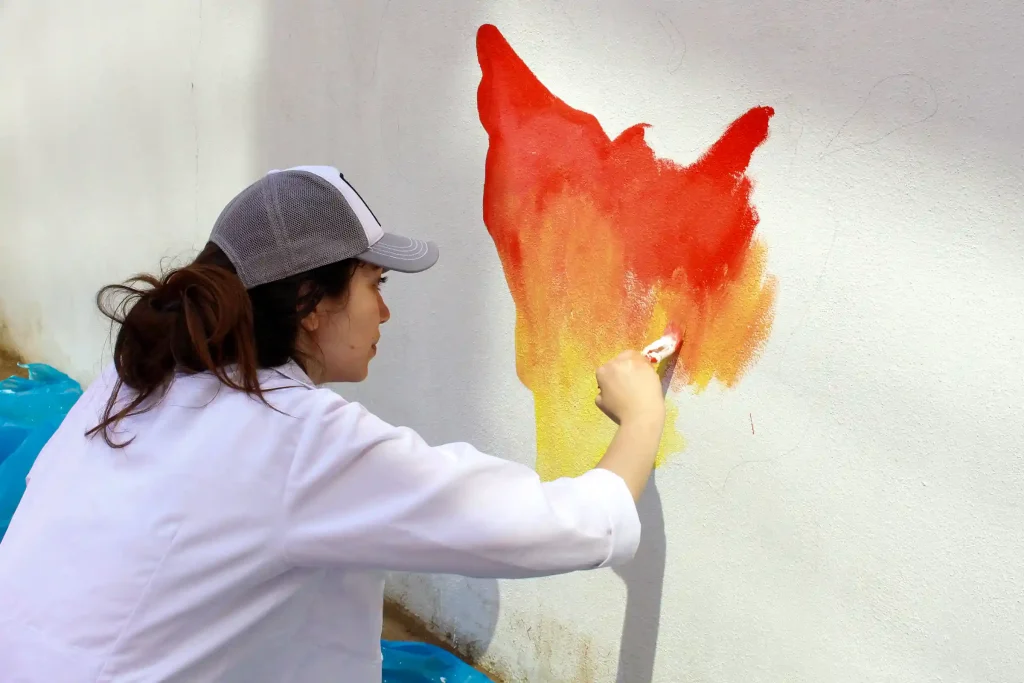
Should you paint your own Torito in Cusco?
This can be one of the more interesting ways to interact with the object.
But only if the workshop tells you where the torito actually comes from.
A typical visitor workshop may give you:
- an unpainted ceramic bull
- acrylic paints
- brushes
- decorative references
- guidance from an artisan or instructor
You then create your own version.
The activity is simple.
Understanding the object is the valuable part.
A good instructor should explain before you start:
- its Puno origin
- why it is called Torito de Pucará
- its relationship with livestock ceremonies
- why pairs are commonly used
- which decorations are traditional
- which designs are contemporary interpretations
If the introduction begins with:
“This is an ancient Inca bull…”
be skeptical.
Is painting one disrespectful to the tradition?
Not inherently.
Living traditions change precisely because people continue interacting with them.
Contemporary artisans themselves experiment with color, scale and decoration.
The more important question is whether the activity accurately identifies the cultural origin of the piece and respects the people whose pottery tradition produced it.
You do not need to copy a traditional design exactly.
In fact, if you are attending a recreational workshop, creating your own color combination may be more honest than pretending to reproduce ceremonial symbolism you do not understand.
Ask before copying symbols.
Then experiment.
One Torito or two?
This question appears constantly in Cusco shops.
If you simply like the object aesthetically:
buy one.
If you want to reproduce the contemporary household tradition associated with complementary protection and prosperity:
consider two.
But do not let symbolism persuade you to buy something you do not want.
There is no cultural rule requiring an international traveler to purchase a pair.
A single well-documented artisan piece is far more interesting than two anonymous mass-produced objects purchased only because someone told you that they “must always come in pairs.”
How can you transport a Torito home without breaking it?
The body is usually not the main problem.
The horns are.
Then the ears.
Then the tail.
A traveler places a ceramic bull carefully between several sweaters and believes it is protected.
The suitcase arrives.
The bull is intact.
One horn has vanished.
The mistake was protecting the object instead of protecting its pressure points.
Pack it differently:
- wrap each horn separately
- protect the ears
- cushion the tail
- wrap the entire piece afterward
- place it inside a rigid box if available
- fill empty space inside the box
- keep the box away from the exterior walls of checked luggage
For a small piece, carrying it in hand luggage is usually considerably safer.
And ask the seller for packaging.
People who regularly sell ceramics have encountered broken horns before.
Should you buy a Torito in Cusco or wait until Puno?
That depends on your itinerary.
| Your trip | Better approach |
| Only visiting Cusco | Buy carefully in Cusco |
| Traveling to Puno later | Wait and compare |
| Interested mainly in decoration | Cusco is convenient |
| Interested in provenance | Look for documented Puno production |
| Interested in meeting makers | Puno region is stronger |
| Want a personal experience | Paint one in Cusco |
| Collector | Research the artisan before buying |
If you are already traveling to Lake Titicaca, there is little reason to rush.
Compare what you find in Cusco with what you later encounter closer to the production areas.
The difference may not simply be price.
It can be information.
In Puno, you may be much closer to someone who knows exactly whose hands made the piece.
What should you avoid buying?
Not because an object is “bad,” but because the description may be misleading.
Be cautious with claims such as:
“Original Inca Torito”
Historically impossible.
“Ancient Pucará design”
Potentially misleading unless the seller clearly distinguishes ancient Pukara archaeological culture from the much later ceramic bull tradition.
“Every symbol is ancient”
Ask for evidence.
“Made in Pucará”
Ask whether that means the town of Pucará, the Puno region more generally, or simply the style.
“100% traditional”
Ask what exactly is traditional:
the clay?
the shape?
the painting?
the firing?
the motifs?
the workshop?
Specific questions make souvenir shopping surprisingly educational.
Traditional Torito or colorful modern Torito?
There is no correct answer.
Choose according to what you value.
Choose a traditional-looking piece if:
- you prefer earthy colors
- you care about regional pottery aesthetics
- you want something closer to older examples
- you are interested in ceramic technique
Choose a contemporary piece if:
- you want stronger colors
- it will become home decoration
- you prefer modern Andean design
- you connect with the individual artisan’s interpretation
Do not assume the brighter version is culturally inferior.
Tradition is not a color palette.
Why is the Torito especially interesting in Cusco?
Because its presence tells a larger story about Peru.
Travelers sometimes imagine regional culture as a collection of fixed boxes:
Cusco = Inca.
Puno = Lake Titicaca.
Arequipa = sillar.
Ayacucho = retablos.
Reality is much less orderly.
Objects travel.
People move.
Traditions cross regional boundaries.
Tourism accelerates some of those exchanges.
The Torito de Pucará in Cusco is a perfect example.
It originated within a Puno ceramic tradition.
It became commercially associated with a railway town.
Its symbolism spread.
Its design evolved.
Tourists carried it abroad.
Cusco artisans and businesses incorporated it into the local craft economy.
And today you can paint one several hundred kilometers from the communities that made the form famous.
That does not weaken its identity.
It makes understanding provenance more important.
Is the Torito de Pucará a good souvenir from Cusco?
Yes—with context.
Cultural story: 5/5
It carries a much more complex history than its small size suggests.
Portability: 3/5
Compact, but fragile.
Decorative value: 5/5
Works easily in both traditional and contemporary interiors.
Connection specifically to Cusco: 3/5
Common in Cusco, but not originally Cusqueñan.
Connection to southern Peru: 5/5
Excellent.
Conversation value: 5/5
Once someone asks why there are two ceramic bulls in your house, you suddenly have a story to tell.
The best way to encounter a Torito in Cusco
Do not make buying one your first step.
First notice them.
Look above doors.
Look at rooftops.
Compare old-looking pieces with modern versions.
Then enter a market.
Pick one up.
Turn it around.
Look at the handle.
Notice the opening.
Ask where it came from.
If possible, paint one.
Then decide whether you want to buy another made by an experienced artisan.
The sequence matters:
see → understand → make → compare → buy.
Most souvenir shopping works in the opposite direction.
And perhaps that is why the Torito de Pucará is particularly useful in Cusco.
It teaches you to stop asking:
“What should I buy from Peru?”
and start asking:
“Who made this, where did it come from, and why does it look this way?”
Once you begin asking those questions, the little ceramic bulls scattered around Cusco stop looking like identical souvenirs.
They become evidence of how traditions actually move through the Andes.
Editor’s note: Individual shops and workshops in Cusco change suppliers frequently, so the presence of Toritos made by a particular Puno artisan cannot be guaranteed simply from the name of a store. When provenance matters, ask for the workshop, artisan or production community rather than relying only on a “handmade” label.