

Amazing trip, thoughtful logistics, and a guide who made Machu Picchu unforgettable.
Thi W TripadvisorFree Tour Cusco – Night | Aqueduct Route
Slogan Here
OVERVIEW
Trip Overview
Most people see Cusco in the daylight. They photograph the Cathedral in the morning, walk to Qoricancha after lunch, and then spend the evening in a restaurant wondering what to do next.
The 6:00 p.m. Free Tour Cusco Night – Aqueduct Route by Andeara shows you the version of this city that the morning tours never reach.
When the sun drops behind the mountains, Cusco changes. The stone turns darker. The plazas empty out. The monuments catch the light differently – the Cathedral facade glows amber, the arches of Qoricancha cast long shadows, and the colonial streets narrow into something that feels genuinely old.
Over two hours on foot, you’ll move through the city’s historic core with a local guide who knows the stories the plaques don’t tell – legends, myths, the water systems that kept this city alive for centuries, and the one stop that makes this route unlike any other walking tour in Cusco.
The Colonial Aqueduct of Sapantiana, lit up at night, is the kind of place that takes most travelers completely by surprise. It shouldn’t exist in the middle of a city. It does. And it’s worth every step of the walk to get there.
No entrance fees. Cold air. A city that looks better after dark.
Itineraries & Prices
Accomodation
Accommodation
Up to 12 people
Group size
15,090 feet (4,600 meters)
Max. altitude
Easy
Difficulty
by Bus
Transport
1B, 1L, 1D
Meals
Trip Details
- Tour name: Free Tour Cusco Night – Aqueduct Route
- Duration: Approximately 2 hours
- Start time: 6:00 p.m.
- Meeting point: Basilica Cathedral – Plaza de Armas, Cusco
- Languages: Spanish / English
- Service type: Shared group / Private groups available
- Difficulty: Easy – cobblestone streets, no significant elevation change
- Altitude: 3,399 m.a.s.l. (11,152 ft)
- Availability: Every day of the year
- Recommended for: All ages
- Night temperature: 8°C to 14°C – bring a jacket
Day by Day Schedule
Highlight of the night: The Colonial Aqueduct of Sapantiana illuminated – and everything it took to get there
Arrive at the Basilica Cathedral by 5:50 p.m. – ten minutes early is enough. Your guide gathers the group as the light fades, introduces the route, and gives a short orientation specific to the night walk: what to watch for in low light, how to handle the cold, and the one stop on this route that most people in Cusco have never seen.
- Terrain: Flat cobblestone throughout, with older and narrower sections toward the aqueduct
- Total walking distance: Approximately 2.5 to 3 km
- Walking time: 2 hours including all stops
- Conditions: Night walk – bring a light source if you have one, though the route stays within illuminated streets
- Temperature at departure: 8°C to 14°C – layers matter more than you’d think
- Difficulty: Low – suitable for all ages and fitness levels
- Transport before the tour: Walk or taxi to Plaza de Armas
- Transport after the tour: On foot from Plaza San Francisco, or taxi from anywhere along the route
Plaza de Armas (approx. 10 minutes)
The tour opens where the Inca Empire held its most important ceremonies and where the Spanish built their most visible monuments. At 6:00 p.m., the afternoon crowds are gone. The Cathedral facade is illuminated. The fountain at the center catches the light.
Your guide covers the dual history of this square – Inca Huacaypata below, Spanish colonial design on top – and sets up the broader story of how this city absorbed and transformed everything that came before it.
Basilica Cathedral – Exterior (approx. 10 minutes)
At night, the Cathedral reads differently than it does at noon. The stonework catches the light from below, and the shadows on the facade fall in a way that makes the scale of the building clearer, not less. Your guide covers the construction history – nearly a century of work, Inca foundations beneath Spanish stone – and the political story behind why the Spanish built on this specific location.
Temple of Triumph (approx. 5 minutes)
A small church with a large amount of loaded history. Built to mark a specific Spanish military moment in 1536, positioned on ground the Inca considered significant. Your guide gives you the context quickly – this is a stop best understood in two sentences, which is exactly how the guide delivers it.
Plaza Cusipata (approx. 5 minutes)
Less known than the Plaza de Armas and quieter for it. This was the secondary ceremonial plaza of the Inca city – Cusipata meaning “place of joy” in Quechua – where festivals and celebrations spilled over from Huacaypata next door. At night, the scale of the original Inca urban design becomes easier to read without the modern city’s traffic in the way.
Casa del Inca Garcilaso de la Vega (approx. 10 minutes)
Born in Cusco in 1539 to a Spanish conquistador and an Inca noblewoman, Garcilaso de la Vega spent most of his adult life in Spain writing the history of the Inca Empire from memory and from documents – in Spanish, for a Spanish audience, at a time when almost everyone else writing about the Inca had conquered them rather than been born among them.
His Royal Commentaries of the Incas is still the most detailed firsthand account of the empire written by someone who actually grew up inside it. Your guide gives you the shape of his life and why the house matters. The building is worth more than a glance.
Avenida El Sol (approx. 10 minutes)
Before it was a commercial avenue, this was a ceremonial road running from the heart of the Inca city to Qoricancha, the Temple of the Sun. The processional axis of an empire. At night, with the modern streetlights on and the foot traffic down, your guide walks you through the layering – what was here before, what replaced it, and what the Inca were communicating with the original design of this corridor.
Palace of Tupac Yupanqui (approx. 10 minutes)
The palace of the tenth Sapa Inca, now visible primarily in the street-level stonework that survived the colonial period. Your guide explains how Inca palaces worked as political objects – built new for each ruler, never shared, never repurposed within the Inca system. The Spanish had a different approach to that stone, which is the story of most of what you see in the city center.
Cusicancha (approx. 10 minutes)
One of the most intact examples of Inca urban planning visible in Cusco. The proportions of the spaces, the relationship between the structures, the logic of the layout – all of it was deliberate. At night, without the daytime visual noise, the geometry of the original design is easier to read. Your guide explains what you’re looking at in terms that make the space make sense.
Qoricancha – Temple of the Sun, Exterior (approx. 10 minutes)
The most important temple in the Inca Empire – dedicated to Inti, the Sun god – and at its height one of the most opulent buildings in the Americas. The outer walls were covered in gold sheet. The Spanish stripped them and built the Convent of Santo Domingo directly on top of the Inca foundations.
At night, the Inca stonework visible in the lower sections of the exterior is lit from ground level, and the contrast between the Inca precision and the colonial construction above it is measurably clearer than it is in afternoon light. Your guide covers both what this building was and what happened to it. The story is not subtle, and it’s better told here at night than anywhere else.
Rimacpampa and Pumakurku (approx. 10 minutes)
Two of the older, quieter sections of the route. Narrower streets, less foot traffic, less signage. The stone here is older and the colonial overlay is thinner in places. This is the part of the walk that the standard tourist circuit skips – which makes it the part most people remember most clearly.
Your guide carries the local oral tradition into these streets. The legends and stories attached to specific corners and doorways on this stretch are the kind of thing you don’t find in guidebooks.
The 12-Angle Stone, Hatunrumiyoc Street (approx. 10 minutes)
Twelve stones, twelve edges, no mortar, no measurable gap. From the palace of the eighth Sapa Inca. Engineers still study this wall. At night, with a light source directed at the joint lines, the precision of the fit is even harder to explain away than it is in daylight.
Your guide covers both the engineering question – what we know about how this was done and what we genuinely don’t – and the local legend attached to this specific stone. Take your time here. The photography at night, with the wall lit from below, is worth the few extra minutes.
Colonial Aqueduct of Sapantiana (approx. 15 minutes)
This is the stop that makes the route.
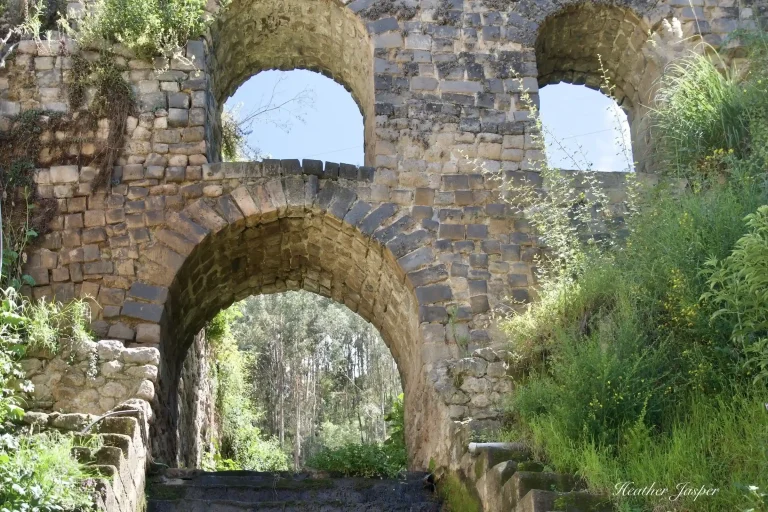
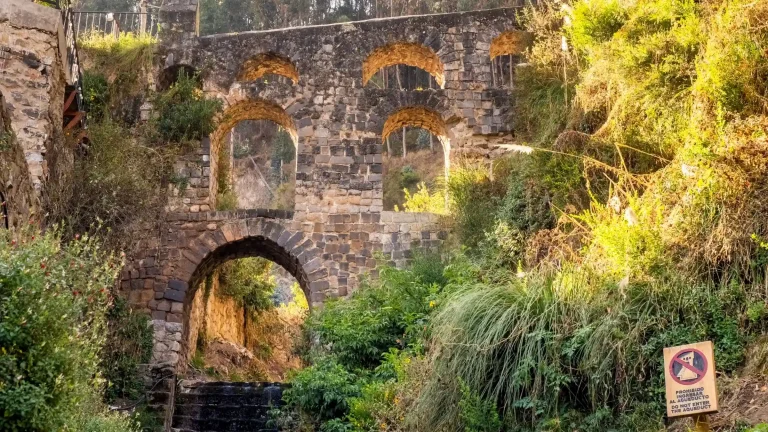
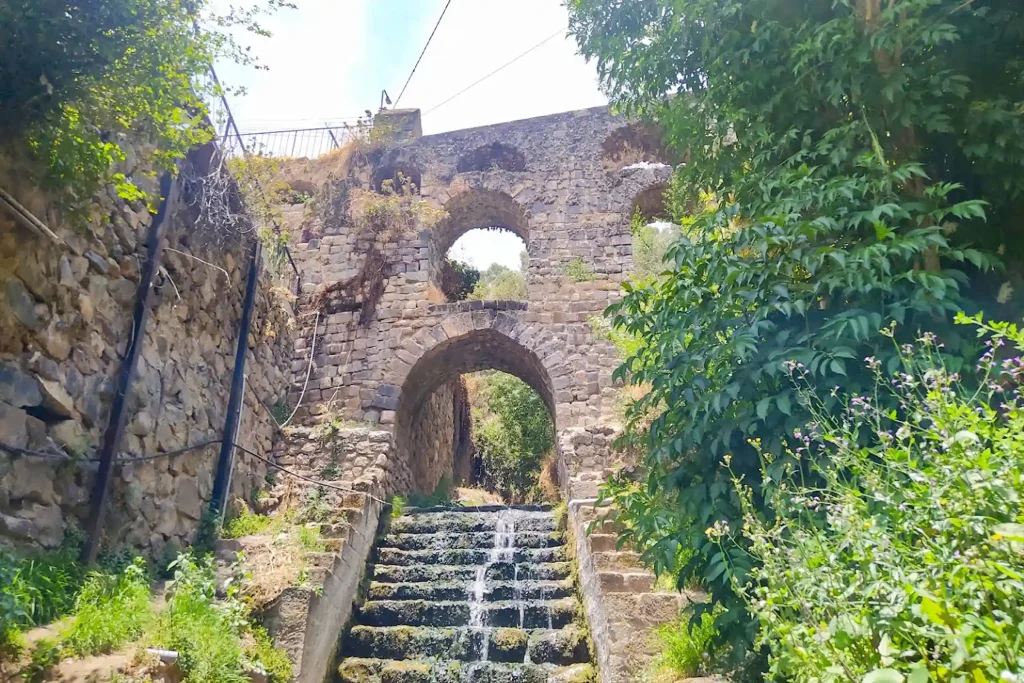
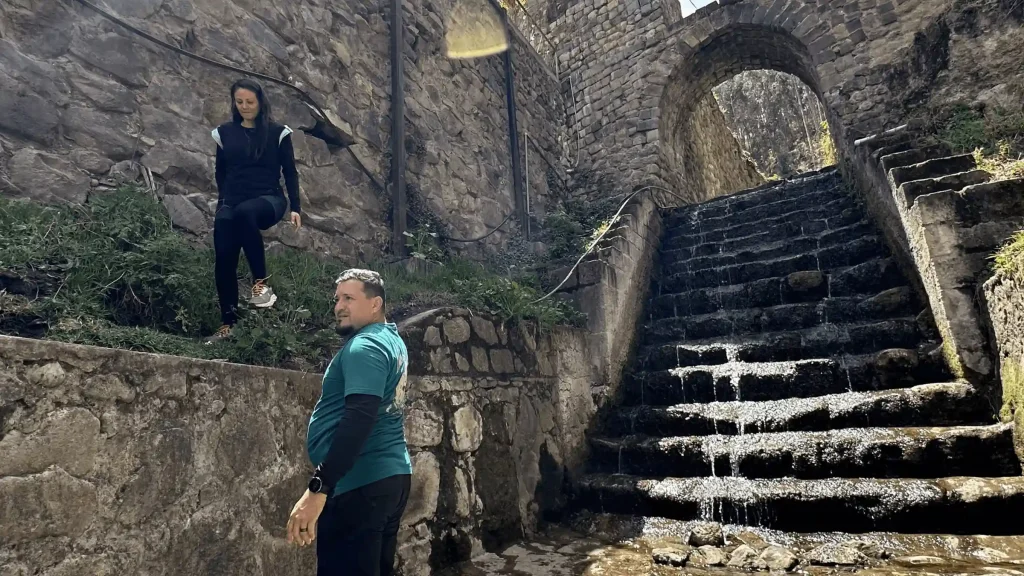
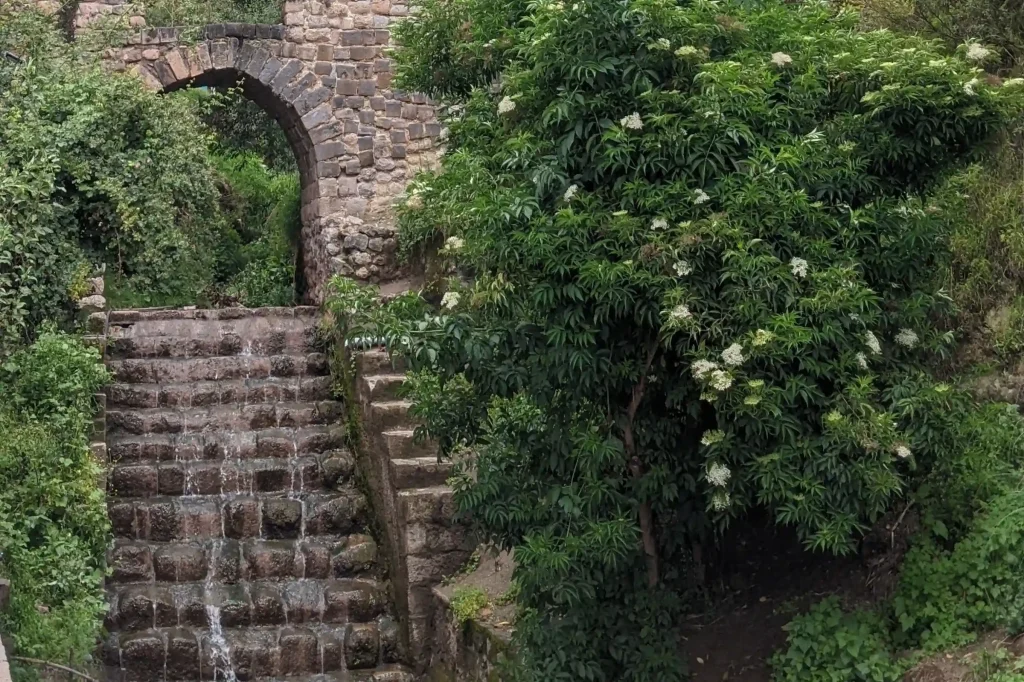
The Sapantiana Aqueduct is a colonial-era hydraulic structure built to carry water across the growing Spanish city of Cusco – stone arches spanning a channel that fed fountains, homes, and public spaces across the historic center. It’s still standing. It’s lit at night. And most travelers who spend a week in Cusco never see it.
Your guide covers the history of water management in Cusco across both empires – the Inca canals that ran through the city before the Spanish arrived, the colonial hydraulic systems built on top of them, and the engineering logic that connects the two. The aqueduct at night, with the stone arches throwing shadows and the channel still visible below, is one of those stops that’s genuinely hard to photograph because the scale of it takes time to absorb.
This is the longest stop on the route for good reason. Stay as long as the guide stays.
Plaza San Francisco (approx. 5 minutes)
The tour ends here, and the evening is yours.
Plaza San Francisco is quieter than the Plaza de Armas at this hour and, for that reason, more pleasant. The church facade is lit. The square has room to breathe. Your guide closes the tour, answers final questions, and points you toward whatever the rest of your Cusco evening looks like – restaurants, bars, a walk back to the hotel, or a night market. The city is still going at 8:00 p.m., and you’re in a good position to decide where to take it.
Inclusions
What’s Included
- Professional bilingual guide (Spanish/English) for the full 2-hour night walk
- Narration and local storytelling at all thirteen stops: Plaza de Armas, Cathedral Basilica exterior, Temple of Triumph, Plaza Cusipata, Casa del Inca Garcilaso de la Vega, Avenida El Sol, Palace of Tupac Yupanqui, Cusicancha, Qoricancha exterior, Rimacpampa and Pumakurku, the 12-Angle Stone, Colonial Aqueduct of Sapantiana, and Plaza San Francisco
- Night-specific historical narration including legends and oral traditions of the Cusco historic center
- Guide assistance before, during, and at the end of the tour
- Local recommendations for the rest of your evening in Cusco
What’s Not Included
- Tourist entrance tickets (interior visits require separate tickets and are not available at night)
- Food or drinks
- Transport to or from the meeting point
- Tips for the guide (voluntary – the guide’s primary income)
- Personal expenses
More Tour Information
- Cusco at night is not Cusco by day – The same streets, the same stones, a completely different atmosphere. Crowds thin out. The light shifts. The city gets quieter in a way that makes the history feel closer.
- The Colonial Aqueduct of Sapantiana – the stop nobody expects – A colonial-era hydraulic structure standing in the middle of the city, lit from below at night. Stone arches built to carry water across a growing colonial capital, still standing exactly where the engineers placed them. Most visitors to Cusco leave without ever seeing it. You won’t.
- Night photography in a city built for it – The Cathedral illuminated against a dark sky. The arches of the aqueduct reflected in the cobblestone. The 12-Angle Stone under artificial light. If you shoot any kind of photography, this route gives you images that afternoon tours simply can’t.
- Legends and stories that only come out after dark – Your guide carries the local oral tradition alongside the standard history. The night setting makes a difference in how those stories land. There are versions of Cusco’s past that feel more appropriate told in lamplight than in the middle of a busy afternoon.
- A guide who knows the city’s water history – The Inca were among the most sophisticated hydraulic engineers in the ancient world. Cusco’s water systems – canals, fountains, ceremonial water channels – were central to how the city functioned. Your guide connects the dots between the Inca channels and the Spanish aqueducts that came after them.
- Plaza de Armas at night – the best version of the square – The tourists clear out, the restaurants light up, and the Cathedral facade sits illuminated against a dark sky. If you’ve already seen the plaza in the afternoon, you’ll want to see it again at this hour.
- A cool, manageable temperature – Nighttime in Cusco sits between 8°C and 14°C. Cold enough that a jacket matters, comfortable enough that two hours of walking is genuinely pleasant. Bring a layer and you’ll be fine.
- The route covers ground the standard tour skips – Plaza Cusipata, Rimacpampa, Pumakurku, the aqueduct itself – stops that most group tours in Cusco don’t include and that most travelers don’t find on their own.
- A proper ending at Plaza San Francisco – Lit at night, less crowded than the Plaza de Armas, and a good place to decide what the rest of your evening looks like.
Hotel Pickup
The Night Aqueduct Tour does not include hotel pickup. The meeting point is the Basilica Cathedral at Plaza de Armas, within walking distance of most accommodation in the Cusco historic center. If your hotel is further from the center, contact our reservations team and we’ll help you figure out how to get there before dark.
Luggage Storage
Andeara does not provide luggage storage. For this tour, a small daypack is ideal – large bags are impractical on the narrower sections of the night route and a security concern in busy public spaces.
Payment Conditions
- The free tour has no upfront payment. Your tip at the end, given directly to your guide in cash, is the payment model.
- Private group bookings require a deposit at reservation. The remaining balance is settled before the tour begins. This confirms your guide and your time slot.
- Tips are paid directly to your guide in cash. Local soles are preferred for small amounts. Have something ready before the tour ends rather than scrambling at the finish.
Availability
The Free Tour Cusco Night – Aqueduct Route runs every day of the year.
For the free tour, no advance payment is required and same-day reservations are generally possible – but we recommend booking ahead, particularly during the high-travel months of June, July, and August. Night tours in Cusco fill more quickly than afternoon tours.
For private group bookings, contact Andeara’s reservations team directly. We recommend reaching out at least 48 to 72 hours in advance to confirm guide availability for the evening slot.
Last-minute bookings (under 24 hours) may be possible for the shared tour – contact us by WhatsApp or phone and we’ll confirm. For urgent requests, phone is always more reliable than messaging alone.
Documents
- Passport – required for all tourist activity in Peru
- A digital or printed copy stored separately from the original
Clothing & Footwear
- Warm jacket or fleece – non-negotiable for a night tour in Cusco; the temperature drops significantly after sunset
- Layered clothing – a base layer plus a mid-layer plus a jacket is the practical setup
- Comfortable, closed-toe walking shoes with grip on uneven surfaces
- Light rain layer or compact poncho – useful in wet season (November to March) and as an extra wind layer in the dry season
Personal Items & Medication
- Any prescription medication you take daily
- Altitude medication if your doctor has recommended it – consult before you travel, not on arrival
- Lip balm – cold, dry air at altitude dries lips quickly
- Hand warmers if you run cold – optional but genuinely useful on this route
Gear
- Small daypack or jacket with pockets – enough for water, your camera, and personal items
- Reusable water bottle – drink throughout the walk even when you don’t feel thirsty
- Camera or smartphone with a charged battery – the aqueduct stop is the shot of the route
- Small flashlight or phone torch for darker street sections
Special requirements: If you travel with mobility equipment, have specific medical needs, or carry professional photography gear (tripods, external flash), notify Andeara’s reservations team before confirming your booking. We will do what we can to accommodate you, but last-minute requests cannot be guaranteed.
Transport
This tour takes place entirely on foot within the Cusco historic center. No vehicle transport is included or needed. The tour begins at Plaza de Armas and ends at Plaza San Francisco – both central, both accessible on foot from most accommodation in the city. Taxis and rideshare apps (InDriver, Cabify) are available throughout Cusco at night if you need transport from further away or want a ride back after the tour ends.
Night Safety in Cusco
The route moves through well-trafficked, well-lit tourist zones of the historic center. Cusco at night in these areas is generally safe, and the tour stays within those zones throughout. That said, standard travel awareness applies:
- Keep valuables in a front-facing bag or zipped inner pocket
- Stay with the group in the narrower street sections
- Let your guide know immediately if something feels off – they know the area
Weather at Night in Cusco
Cusco’s nights are cold across all seasons, and noticeably more so in the wet season.
- Dry season nights (April to October): Clear skies, cold air, temperatures between 8°C and 14°C. Strong starfield visibility above the city on clear nights.
- Wet season nights (November to March): Light rain common in the evening, temperatures at the lower end of the range or below. The tour runs in light rain – bring a rain layer and expect the cobblestone to be slicker than usual.
Average night temperatures: 8°C to 14°C at the start of the walk, dropping further by the end.
Accommodation in Cusco
Most accommodation in the Cusco historic center is within walking distance of both the starting and ending points of this tour. Staying in the historic center means you’re close to everything after the tour ends – restaurants, bars, markets, and a short walk back to your room when the night is done. If you need accommodation suggestions, contact Andeara’s reservations team.
Travel Restrictions & Important Notes
Strikes and Demonstrations
Strikes and demonstrations are common in Peru and can interrupt tours, including night tours. Roads may be blocked and public plazas can be occupied. We will make every effort to run the tour as planned, adjusting the route or timing when necessary.
If a tour must be canceled, our operations department will coordinate directly with you. Your safety is the priority in all decisions.
Lost Objects
Pay close attention to your belongings at night. Take everything with you when you leave our company. You are solely responsible for your personal items during the tour. In lower-lit sections of the route, keep bags closed and close to your body.
Health Considerations
This tour is rated easy and is suitable for all ages and most fitness levels. Night temperatures in Cusco – between 8°C and 14°C – add a physical dimension that the same walk in the afternoon doesn’t have. Cold air at altitude is harder on the body than cold air at sea level.
- Spend at least 24 to 48 hours in Cusco before joining the night tour to start adjusting to the altitude
- Avoid alcohol before and during the tour – cold air and altitude together make alcohol’s effects significantly stronger than at sea level
- Dress appropriately – inadequate clothing in cold, high-altitude conditions is a genuine health risk, not just a comfort issue
- Drink water before the tour and carry a bottle – cold weather reduces the sensation of thirst but not the body’s need for hydration
- Coca tea (mate de coca) is widely available in Cusco and helps with mild altitude symptoms – have a cup in the hour before the tour if you’re feeling the altitude
- Let your guide know immediately if you feel unwell during the walk – the tour can pause or adjust at any point
- If you have a heart condition, respiratory condition, or have never been at high altitude before, consult your doctor before booking any night outdoor activity in Cusco
The route involves no steep climbs and no demanding terrain. The entire walk stays within the illuminated streets of the historic center. In reasonable health and dressed appropriately for the temperature, this tour presents no significant physical challenge.
Require More Information
Select a departure date
Pick a month, then choose your start date. Return date is calculated using the tour duration.
Upcoming departures
Contact Us
Let our local experts help you choose the perfect Peruvian adventure.
Related Tours

Traveler Reviews